 SHOP NOW
 LOCATIONS




 Romantic Depot Sexologist
Why Sexual Hygiene Matters: Cleaning vs. Sanitizing vs. Sterilizing
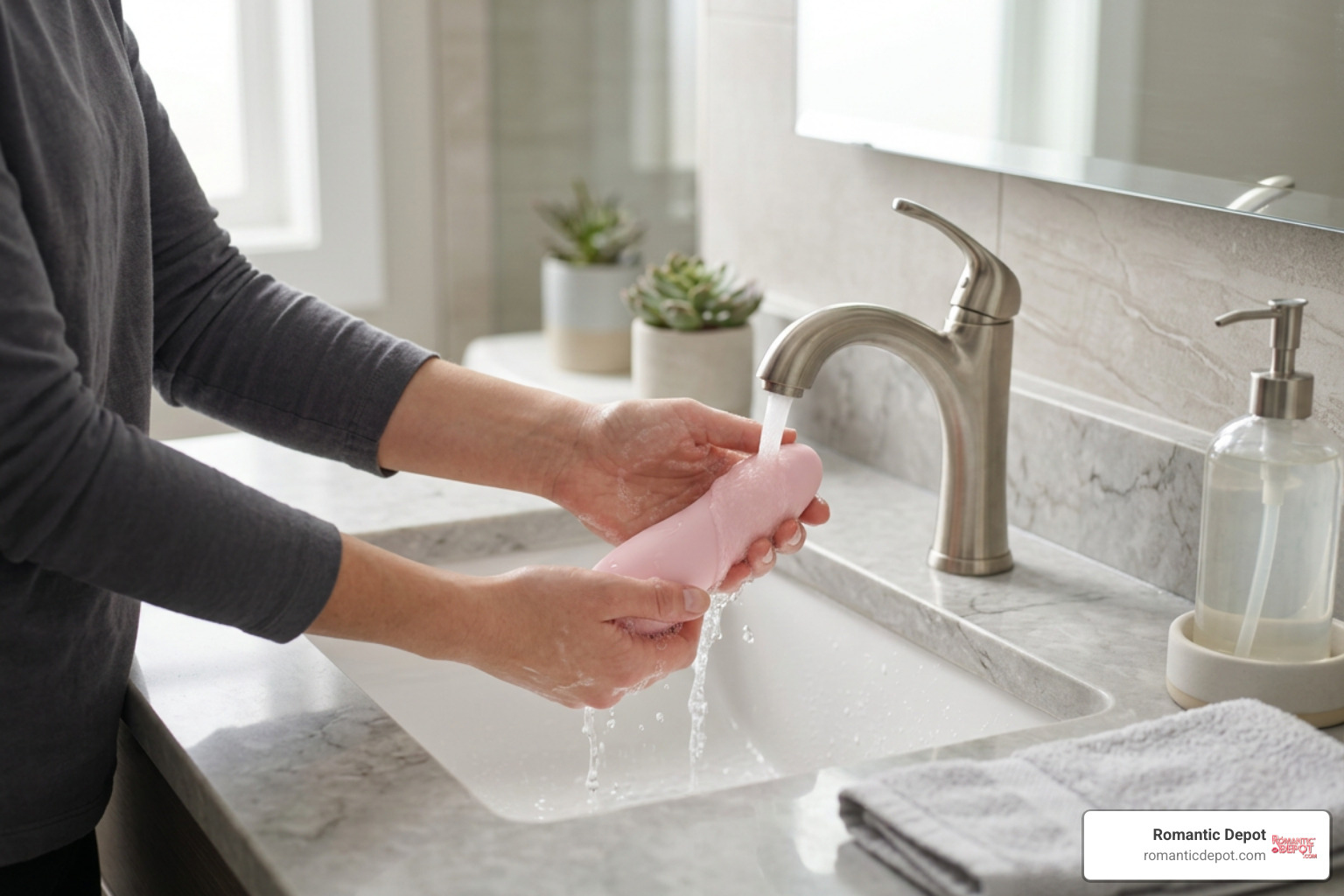
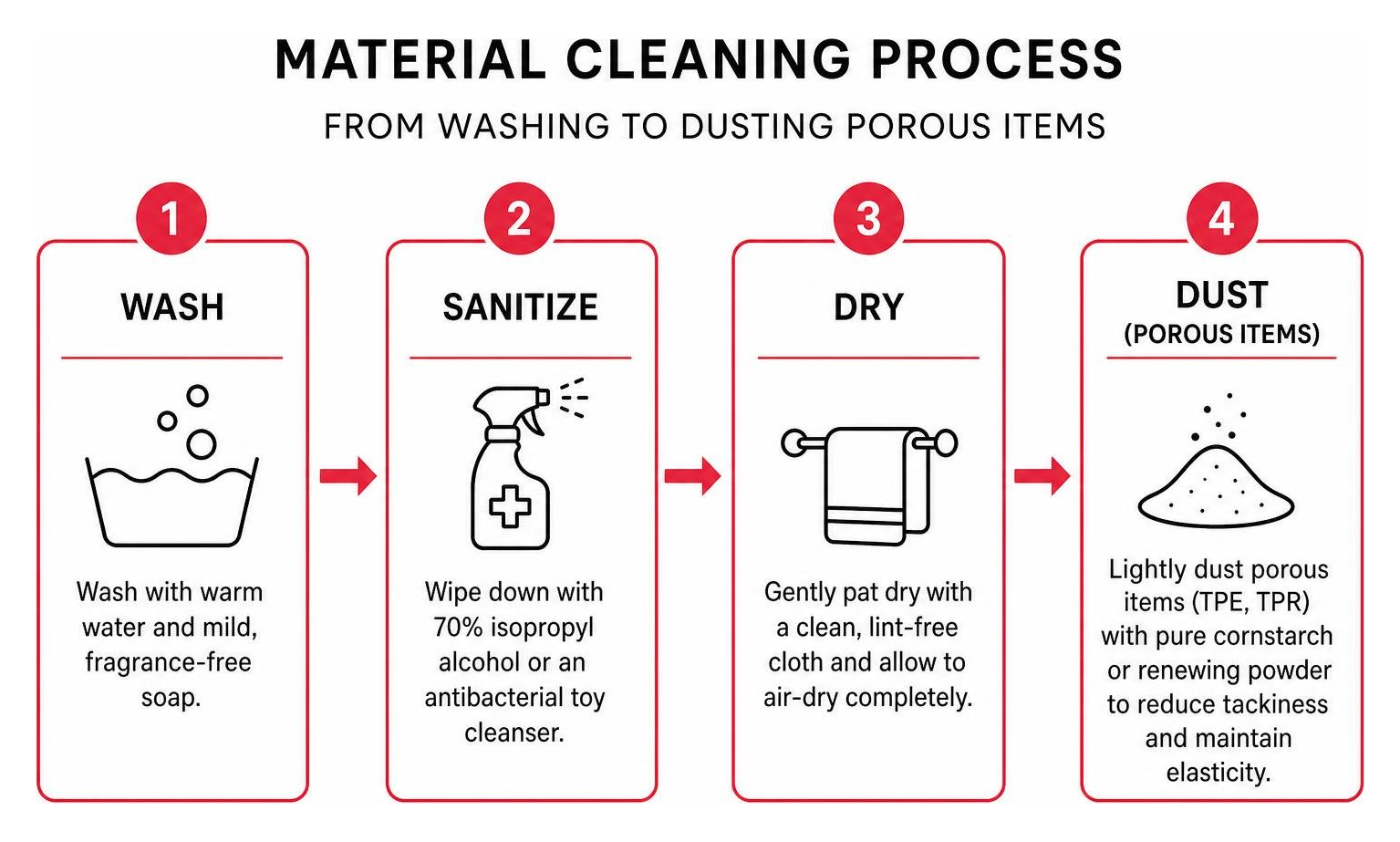
To clean sex toys quickly after solo or partnered play, wash them with warm water and a mild, unscented soap or pH-balanced toy wash, then rinse and pat dry with a lint-free cloth. Non-porous, non-motorized silicone, glass, and stainless steel toys can be further sanitized with 70% isopropyl alcohol or sterilized by boiling for 3–5 minutes. Porous materials like TPE or jelly rubber should be washed gently and air-dried, while motorized toys require careful surface wiping to protect internal electronics.
Proper hygiene is essential for maintaining intimate wellness and preventing infections. While post-play afterglow often tempts people to set their toys aside, skipping immediate maintenance can lead to health complications. Research shows that nearly 14% of women have never cleaned their vibrators, which dramatically increases the risk of bacterial accumulation, urinary tract infections (UTIs), bacterial vaginosis (BV), and yeast infections.
When adult novelties come into contact with bodily fluids, vaginal secretions, semen, or fecal matter, they gather microscopic pathogens. If left unwashed, bacteria form biofilms—resilient colonies that adhere to surfaces and resist simple rinsing. Pathogen persistence varies significantly depending on the device’s material. Clinical research demonstrates that human papillomavirus (HPV) was detected on 89% of thermoplastic elastomer (TPE) vibrator shafts and 67% of silicone shafts following use by individuals positive for vaginal HPV. After washing with standard commercial cleaners, HPV remained present on 56% of TPE toys and 44% of silicone toys. After 24 hours, 40% of TPE toys still carried detectable viral DNA, whereas non-porous silicone tested clean. Following a dedicated step-by-step guide to sex toy hygiene helps eliminate these risks and keeps intimate sessions safe.
Understanding how to eliminate pathogens requires recognizing the differences between cleaning, sanitizing, and sterilizing:
| Level of Hygiene | Definition | Typical Methods | Body Safety Impact |
|---|---|---|---|
| Cleaning | Removes physical dirt, body fluids, oils, and surface residues. | Warm water and mild, unscented soap or pH-balanced toy wash. | Routine first step; reduces surface microbes but does not kill all viruses or bacteria. |
| Sanitizing | Reduces the number of microorganisms to safe public health levels. | 70% isopropyl alcohol wipe down or specialized antibacterial toy cleansers. | Neutralizes most common bacteria and fungi; essential for deeper hygiene. |
| Sterilizing | Completely eliminates all living microorganisms, spores, and viruses. | Boiling in water for 3–5 minutes or top-rack dishwasher cycles without detergent. | Achieves maximum cleanliness; only suitable for non-motorized, non-porous materials. |
For detailed medical standards and manufacturer recommendations, you can consult expert guidelines on cleaning and sanitizing intimate products to ensure your routine protects your delicate mucosal tissue.
Material Guide: How to Clean Sex Toys Made from Silicone, Glass, Metal, and TPE
Every material interacts differently with heat, water, and chemical agents. Knowing the composition of your adult novelties ensures you select the correct routine without damaging the product or risking tissue irritation. A fundamental step in bedroom wellness is selecting body-safe pleasure toys made from non-porous materials.
Non-Porous Materials: Platinum Silicone, Borosilicate Glass, and Stainless Steel
Non-porous materials feature completely smooth, non-absorbent surfaces that prevent fluids, bacteria, and viruses from sinking into the toy.
- Platinum-Cure Silicone: The industry gold standard for body safety. Non-motorized silicone can be washed with warm water and mild, fragrance-free liquid soap. Because silicone is heat-resistant, non-motorized silicone toys can be boiled in water for 3 to 5 minutes or placed on the top rack of a dishwasher (without dish detergent or rinse aids). Never use silicone-based lubricants with silicone toys, as they cause irreversible chemical melting and surface pitting.
- Borosilicate Glass: Hypoallergenic, non-porous, and rigid. Glass toys are compatible with all lubricant types and are simple to sterilize. To ensure longevity, follow the manufacturer’s care guidelines for glass dildos by washing with warm soapy water or boiling them. Always inspect glass devices for hairline cracks, chips, or surface imperfections before every session.
- Surgical Stainless Steel: Highly durable, sleek, and non-porous. Stainless steel novelties can be washed with soap and water, wiped with 70% isopropyl alcohol, boiled, or placed in a top-rack dishwasher cycle.
- ABS Plastic: A hard, rigid plastic used in shells and handles. Wash ABS plastic with warm water and mild soap. Avoid boiling ABS plastic or exposing it to high dishwasher temperatures, as excessive heat can warp the plastic casing.
Porous Materials: TPE, TPR, and Realistic Jelly Rubber
Porous materials contain microscopic holes that trap moisture, bacteria, lubricants, and skin cells.
- TPE (Thermoplastic Elastomer) and TPR (Thermoplastic Rubber): Commonly used for soft, flexible sleeves and realistic dildos, these materials simulate realistic skin textures. However, they cannot be boiled or sterilized with extreme heat, as heat deforms and melts the material.
- Jelly Rubber and PVC/Vinyl: Soft, flexible materials often formulated with plasticizers. These are highly porous and prone to bacterial accumulation.
- Cleaning Routine: Wash porous novelties using warm water and antibacterial soap or a dedicated foaming toy wash. Gently pat them dry with a clean, lint-free cloth, then let them air-dry completely in a well-ventilated room.
- Maintenance Tip: After drying, dust TPE and TPR products lightly with pure cornstarch or renewing powder to eliminate surface tackiness and preserve the material’s elasticity.
Step-by-Step: How to Clean Sex Toys with Motors and Electronics
Vibrating, thrusting, and motorized pleasure devices require careful handling to safeguard their internal circuitry and batteries.
- Check the Ingress Protection (IP) Rating: Check your device’s manual. An IPX7 rating means the toy can be submerged in up to 1 meter of water for 30 minutes. An IPX4 to IPX6 rating indicates splash resistance only. If your toy has no rating or features exposed battery compartments, assume it cannot be submerged.
- Remove Replaceable Batteries: If your device uses standard AAA or AA batteries, remove them prior to washing to avoid corrosion or short circuits.
- Clean Carefully: For splashproof or non-submersible items, use a clean cloth dampened with warm water and mild soap to wipe down the shaft, tip, and handle. Keep water away from mechanical joints, magnetic charging pins, and battery seams.
- Rinse and Dry: Wipe away all soapy residue using a second cloth dampened with fresh water. Pat the device dry with a lint-free towel and store it with the battery compartment open until completely dry.
To extend the lifespan of your collection, consult our comprehensive guide on the best vibrators on the market. If you prefer specialty hygiene products, choose pH-balanced specialty toy cleaners that rinse away cleanly without leaving chemical films.
Disinfection Protocols, Partner Sharing, and Safe Storage
Maintaining proper hygiene prevents cross-contamination between different anatomical regions and sexual partners.
Harsh Cleaning Agents to Avoid
Never use the following substances on your adult toys, as they can cause chemical degradation, toxic residue, or vaginal and anal irritation:
- Hand Sanitizer & Undiluted Alcohol: Strips protective coatings and causes silicone degradation.
- Acetone, Bleach, and Mineral Spirits: Cause chemical burns on skin and dissolve plastics.
- Scented Soaps & Body Washes: Leave fragranced films that disrupt natural vaginal pH.
- Abrasive Scouring Pads & Cleansers: Scratch surfaces, creating microscopic crevices where bacteria thrive.
Beginner Protocols: How to Clean Sex Toys for Anal and Multi-Partner Play
Safe play requires dedicated hygiene habits, especially when engaging in anal play or sharing items between partners.
- Anal Hygiene: Because the rectum naturally hosts E. coli and other bacteria, anal toys must be thoroughly cleaned immediately after use. Follow proper hygiene rules for butt plugs and anal toys by using non-porous silicone, glass, or steel devices that can be sanitized or boiled. Always pair anal play with compatible lubricants for sex to prevent micro-tears in delicate tissue.
- Partner Sharing Precautions: Research shows that individuals who share pleasure products without protective barriers report significantly higher rates of bacterial vaginosis and candidiasis. When sharing non-porous items, wash and sanitize them thoroughly between partners. When sharing porous TPE or jelly toys, always apply a fresh condom over the device for each user.
Proper Storage Techniques and When to Retire Old Toys
How you store your devices determines their long-term durability and cleanliness:
- Store Individually: Never store two silicone toys in direct contact with one another. Over time, their plasticizers interact, causing them to chemically bond and degrade.
- Use Breathable Pouches: Store clean, dry toys in individual satin, cotton, or microfiber pouches. Avoid airtight plastic zip bags, which trap lingering moisture and encourage mold growth.
- Cool, Dark Environment: Keep storage containers away from direct sunlight, radiators, and high humidity.
- When to Retire a Toy: Non-porous materials like glass and steel can last over a decade. However, replace porous TPE or TPR items every 3 to 6 months if used frequently. Retire any item immediately if it displays sticky residue, discoloration, micro-cracks, an unpleasant odor, or exposed internal wiring.
Frequently Asked Questions About Sex Toy Hygiene
Can I clean my toys with rubbing alcohol or hand sanitizer?
No. Hand sanitizers and undiluted rubbing alcohol contain harsh concentrations, fragrances, and moisturizers that dry out and degrade silicone, rubber, and soft plastic. Furthermore, lingering alcohol residue can cause chemical burns and severe irritation on delicate mucosal tissues. Use warm water and mild, unscented soap or a specialized toy wash instead.
Is it safe to boil or dishwasher motorized sex toys?
No. You should never boil or dishwasher any motorized, battery-operated, or rechargeable sex toy. The intense heat causes thermal expansion, which melts waterproof seals, ruins internal silicone buttons, warps plastic housings, and destroys lithium-ion batteries. Boiling and dishwasher sanitization should only be used on 100% solid, non-motorized silicone, borosilicate glass, or surgical stainless steel toys.
How often should porous TPE or jelly toys be replaced?
Porous toys made from TPE, TPR, or jelly rubber should typically be replaced every 3 to 6 months with regular use, or within 1 to 2 years with occasional use. Because their microscopic pores trap bacteria and cannot be fully sterilized with high heat, they degrade faster than non-porous options. Replace them immediately if they become persistently tacky, discolored, misshapen, or develop an unremovable chemical odor.
Conclusion
A consistent hygiene routine protects your health, keeps your intimate experiences comfortable, and ensures your devices perform reliably for years. By matching the right cleaning method to each material—and using barrier protection when sharing—you can enjoy seamless solo and partnered play with complete peace of mind.
At Romantic Depot, we are dedicated to supporting your sexual wellness journey with body-safe products, educational guidance, and premium pleasure essentials. Explore our latest sexual health and wellness updates or visit Romantic Depot online and across our New York and New Jersey store locations to browse our curated collection of high-quality pleasure products.