 SHOP NOW
 LOCATIONS




 cklimasz@gmail.com
What is Sexual Self-Care and Why Does It Matter?
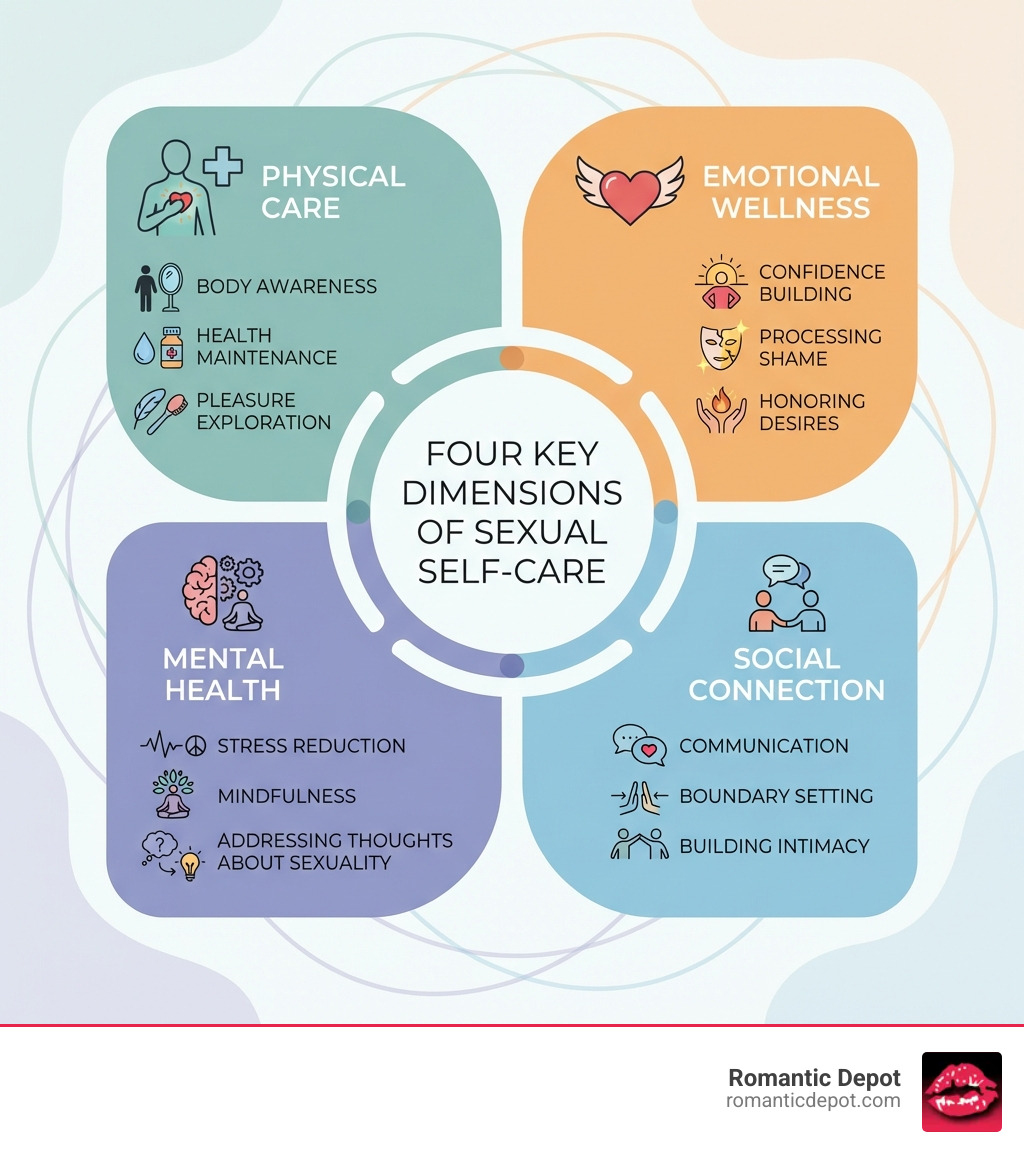
Sexual self-care is the practice of taking intentional action to preserve or improve your sexual well-being. It goes beyond just having sex or masturbating—it includes caring for your body, understanding your pleasure, setting boundaries, maintaining your sexual health, and building confidence in your sexuality.
Quick Answer: What is Sexual Self-Care?
Sexual self-care involves:
- Physical care: Body appreciation, self-massage, pampering rituals, and regular health check-ups
- Emotional wellness: Building sexual confidence, working through shame, and honoring your desires
- Mental health: Reducing stress through pleasure, practicing mindfulness, and processing feelings about sexuality
- Social connection: Communicating boundaries, discussing needs with partners, and building intimacy
- Health maintenance: STI testing, contraception planning, and reproductive care
- Pleasure exploration: Understanding what feels good through solo or partnered activities
The importance of sexual self-care cannot be overstated. As one source notes, “Your active connection to healthy sexual energy impacts your physical and emotional well being in a major way.” It affects how much pleasure you experience in relationships, how you show up at work, and how connected you are to your creativity.
Research shows the stakes are high. Approximately 8 in 10 Americans say they frequently or sometimes encounter stress in their daily lives. Stress has been linked to heart disease, diabetes, depression, anxiety, and accelerated aging. Meanwhile, sexual dysfunction affects approximately 10-40% of the global population, with studies in Iran showing 27.3% prevalence among women.
Sexual self-care offers a powerful antidote. It releases oxytocin—the “love hormone”—which reduces stress and supports psychological health. It helps you understand your body and move beyond shame. For many people, especially those who’ve experienced trauma or struggle with body image, sexual self-care becomes a path to reclaiming agency and finding personal empowerment.
Yet many of us never learned how to practice it. Only 39 states in the US mandate sex education, and of those, only 18 require medically accurate content. We’re left to figure it out on our own, often feeling disconnected from our sexuality or unsure where to start.
This guide changes that. We’ll walk you through practical, accessible ways to nurture your sexual well-being—from connecting with your body to exploring pleasure, building intimacy, and prioritizing your health.
At Romantic Depot, our mission is to advance sexual health, wellness, and education for people of all genders and orientations. Through our Dignity & Respect Campaign, in-store guidance, and educational workshops, we’ve helped thousands of individuals explore sexual self-care safely and confidently. Let’s walk through how Romantic Depot can support you in building a sexual self-care routine that fits your unique needs and desires.
The Pillars of Sexual Wellness
When we talk about sexual self-care, it’s essential to understand that it’s deeply intertwined with our overall well-being. Sexual health isn’t just about the absence of disease; it’s a positive state of physical, emotional, mental, and social well-being in relation to sexuality. The World Health Organization (WHO) defines sexual health as “a state of physical, emotional, mental and social well-being in relation to sexuality; it is not merely the absence of disease, dysfunction or infirmity.” This comprehensive view means sexual health is now considered one of the four essential pillars of health, alongside physical, mental, and spiritual health.
This expanded understanding encourages us to move beyond simply preventing problems and instead actively cultivate a fulfilling and pleasurable sexual life. It’s about nurturing our whole selves.

The Six Principles of a Healthy Sex Life
To help us steer this broader definition of sexual health, experts have developed six guiding principles that focus on creating a positive approach to sexuality. These principles serve as a fantastic framework for our sexual self-care journey:
- Consent: This is the absolute foundation of any healthy sexual interaction. Consent means actively and enthusiastically agreeing to engage in a sexual act or relationship. It’s about letting your partner know that a specific sexual act is wanted and desired at every step of the way. It must be ongoing, freely given, and can be withdrawn at any time.
- Non-Exploitation: This principle emphasizes fairness and respect. It means that no one should use their power, control, or a position of vulnerability over another person to receive sexual gratification. Sexual interactions should be equitable and free from manipulation or coercion.
- Honesty: Open and direct communication is key, both with yourself and your sexual partner(s). Honesty involves expressing your true desires, thoughts, wants, and wishes about your sexual health and experiences. It builds trust and allows for genuine connection.
- Shared Values: Understanding your own and your partner’s motivations for sex is crucial. This principle encourages reflection on what you need to feel sexually happy, confident, and satisfied. Exploring shared values helps ensure that sexual encounters align with mutual respect and understanding.
- Protection from STIs, HIV, and Unwanted Pregnancy: This practical principle involves taking proactive steps to safeguard your health. It includes implementing a contraception plan and a plan for preventing sexually transmitted infections (STIs) and HIV. This means access to testing, proper medical attention, and using barrier methods like condoms.
- Pleasure: Often overlooked in traditional sexual health discussions, pleasure is a primary motivation for sexual activity and a vital component of sexual health. It’s about balancing sexual safety and responsibility with a lifelong curiosity about pleasure and sexual interests. There’s no single “right way” to experience pleasure, and exploring what feels good to you is a critical part of sexual self-care.
By embracing these principles, we can construct our own vision of personal sexual health and well-being.
The Crucial Role of Communication and Consent
At the heart of a healthy and fulfilling sexual life, both solo and partnered, lies effective communication and unwavering consent. As we discussed, consent is active, enthusiastic, and ongoing. It’s not just the absence of a “no”; it’s the presence of an enthusiastic “yes.”
But communication goes beyond just consent. It involves openly discussing your needs, desires, fantasies, and boundaries with your partner(s). This level of honesty builds immense trust and intimacy, making your sexual experiences far more enjoyable and secure. If you’re uncomfortable talking about sexual needs, having an open and honest conversation is always the best way. Firm boundaries allow for clear identification of consent and help you articulate what is off-limits. Boundaries, like consent, can change, and should be checked in on regularly. Learning to respond to “no” respectfully is an act of sexual self-care in itself, for both partners.
Building these communication skills can transform your relationships. We’ve compiled some helpful Connect With Women Tips that can also be applied to any partner, focusing on fostering deeper understanding and connection.
A Practical Guide to Your Sexual Self Care Routine
Now that we understand the “what” and “why” of sexual self-care, let’s dive into the “how.” Building a routine doesn’t have to be overwhelming. The key is curiosity, starting small, and being patient with yourself. Self-care is not a quota to fill or a race to win; it’s a gentle practice of deepening your relationship with yourself.
1. Connect With Your Body and Mind
Our bodies are the vessels through which we experience pleasure, yet many of us feel disconnected or even critical of them. Sexual self-care begins with fostering a positive relationship with your physical self, outside of purely sexual contexts.
- Mindfulness and Body Appreciation: Take time to notice what you like about your body. Instead of comparing it to others, thank your body for its abilities. Mindfulness means paying attention in a particular way—on purpose, in the present moment, without judgment. This is an excellent way to connect with your authentic self as a sexual and erotic being.
- Body Awareness: Engage in daily movement like walking, dancing to your favorite songs, or practicing stretching and yoga. These activities help you find your internal rhythm and increase comfort and awareness of your body.
- Pampering and Self-Massage: There’s a reason pampering feels so good! It’s a fantastic way to feel sexy and connected to your body. This could include exfoliating your body, manipulating body hair in a way that feels good to you, or giving yourself a self-massage. Start with your hands, feet, and scalp, and then explore further. Self-massage with high-quality oils can release internal toxins, calm nerves, and soften skin. These pampering rituals are a great way to nourish your sensual self.
2. Explore Your Pleasure Potential
Understanding what brings you pleasure is a cornerstone of sexual self-care. It’s about taking ownership of your body and your desires.
- Masturbation as Self-Findy: Masturbation isn’t just a physical release; it’s a powerful tool for self-exploration. It allows you to understand your body’s unique pleasure points, what turns you on (and off!), and how you like to be touched. As we often say during Solo Play Month is Here, taking pleasure into your own hands is an act of empowerment.
- Understanding Your Erogenous Zones: Our bodies are full of sensitive areas beyond the genitals. Explore your own erogenous zones with varying types of touch, texture, and pressure. Try using your “other hand” when masturbating to find new sensations, or practice slowing down to create a more intentional and pleasurable experience.
- Experimenting with Adult Sex Toys: For many, adult toys are a fantastic way to deepen self-exploration and pleasure. They can help you find new sensations and understand your body’s responses in ways that might be difficult with just your hands. Whether you’re curious about Adult Sex Toys for solo play or want to learn more about specific types like The Ultimate Guide to Vibrators or finding Top Dildos for Ultimate Pleasure, we offer a wide range of products to help you on your journey.
3. Nurture Intimacy and Connection
Sexual self-care isn’t solely about solo activities; it also extends to how we connect with others. Nurturing intimacy, whether with a partner or within our social circles, significantly contributes to our sexual well-being.
- Scheduling Intimacy: You might be thinking, “Boo! Scheduling sex isn’t fun!” but as one expert playfully responds, “Well, at least the people scheduling sex are getting some!” If sexual intimacy is important to you, it needs to be prioritized. Think of it as an exciting event on the calendar, not a chore. You can read more about why scheduling sex can be fun.
- Discussing Fantasies: Openly sharing your sexual fantasies with a trusted partner can be incredibly intimate and exciting. It’s a way to explore new dimensions of your connection and build anticipation.
- Exploring New Activities Together: Monotony can dampen desire. Try new positions, locations, or even introduce sex toys for couples to add novelty and excitement. There are countless ways to spice up your sex life and nurture shared pleasure.
4. Prioritize Your Sexual Health
A crucial, often practical, aspect of sexual self-care is actively maintaining your sexual health. This involves proactive steps to prevent issues and ensure your well-being.
- Regular Wellness Visits: Treat your sexual health like any other aspect of your physical health. Schedule regular wellness visits with a healthcare provider. These visits are opportunities to ask questions about sexual health, birth control, or family planning. They may include check-ups like Pap tests or pelvic exams, depending on your needs.
- STI/HIV Testing: If you are sexually active, getting tested for STIs and HIV is a non-negotiable part of self-care. Many STIs are asymptomatic, meaning you might not know you have them without testing. Knowing your status protects both you and your partner(s). For more information, consult CDC information on STIs.
- Contraception Options: Educate yourself on the various contraception methods available and choose one that aligns with your lifestyle and family planning goals. Options range from hormonal birth control (pills, shots, patches, IUDs) to copper IUDs, spermicidal methods, and barrier methods like condoms. Condoms are particularly important as they offer protection against both STIs and unintended pregnancy. You can find comprehensive Information on birth control from reliable sources.
Overcoming Barriers to Sexual Self-Care
While sexual self-care sounds wonderful in theory, practicing it can be challenging. We often face internal and external barriers that make it difficult to prioritize our sexual well-being.
Societal norms, cultural beliefs, and personal history can profoundly impact our ability to accept sexual self-care. Many of us grew up in environments where sex was a taboo topic, leading to shame and discomfort. The lack of comprehensive sex education in many parts of the U.S. means a large percentage of our population experiences some level of shame connected with sex or sexual desires. This can make it hard to even acknowledge, let alone explore, our sexual selves. Body image issues, often fueled by unrealistic media portrayals, can also make us critical of our bodies and uncomfortable with pleasure.
Overcoming this shame is a vital step. As researcher Brené Brown teaches, empathy is the antidote to shame. Sharing your findies and feelings with a safe partner, friend, or even a therapist can help dismantle these barriers. Moving beyond societal rules about sex and looking inward is the best plan of action when you feel in a rut or disconnected from your sexuality.
How to Assess Your Current Sexual Self Care
Before you can improve your sexual self-care, it’s helpful to understand where you currently stand. Take a moment for self-reflection.
Here are some reflective questions and journaling prompts to guide you:
- What does your sexual health mean to you right now?
- What practices do you regularly engage in to take care of your physical self (e.g., healthy eating, hydration, exercise)? How do these impact your sexual energy?
- What are your sexual needs, desires, and fantasies? What are your personal limits and boundaries?
- What feels good, neutral, or irritating when it comes to sexual sensations or activities?
- How confident do you feel about your sexuality? What are you most proud of, and what areas would you like to improve?
- When was the last time you truly explored your body for pleasure without any goal or expectation?
- Are there any societal or cultural messages about sex that you’ve internalized that might be holding you back?
- How do you communicate your sexual needs and boundaries to partners (or yourself)?
By honestly answering these questions, you can identify areas for improvement and acknowledge what you’re already doing well. Journaling can be a powerful tool to capture these thoughts and help you start creating a personalized sexual self-care routine.
Navigating Low Libido or Desire Discrepancy
It’s completely normal for libido to fluctuate throughout life, influenced by stress, hormones, medication, and life changes. However, persistent low libido or desire discrepancies with a partner can be a source of distress.
Stress, in particular, can significantly impact our sexual desire and satisfaction. High stress levels have been linked to various health concerns, including anxiety and depression, which in turn can negatively affect the quality of our sexual life. When we’re burned out or overwhelmed, sex might be the last thing on our minds.
If you’re experiencing low libido or a desire discrepancy, remember:
- Acknowledge and Validate: It’s okay for your desire to change. Don’t shame yourself for it.
- Identify Stressors: Are there major stressors in your life (work, family, health) contributing to a dip in desire? Addressing these can often help.
- Communicate with Partners: Open and honest communication about your fluctuating desire is crucial. Your partner can’t read your mind. Discussing these changes can prevent misunderstandings and foster empathy. Our seven tips for dealing with incompatible sex drives offer practical advice.
- Re-engage with Pleasure (without pressure): Sometimes, simply engaging in non-goal-oriented pleasure (like self-massage, sensual touch, or mindful masturbation) can help rekindle desire without the pressure of an outcome.
- Seek Professional Support: If low libido or desire discrepancy is causing significant distress, a sex therapist or healthcare provider can offer valuable guidance and rule out any underlying medical conditions.
Frequently Asked Questions about Sexual Self-Care
We often encounter common questions and misconceptions about sexual self-care. Let’s address some of them directly.
Is practicing sexual self-care selfish?
Absolutely not! This is a common misconception. Practicing sexual self-care is not selfish; it’s essential for your overall well-being. Think of it this way: you can’t pour from an empty cup. When you prioritize your own sexual health and pleasure, you become more confident, present, and capable of connecting deeply with others. It helps you maintain a healthy relationship with yourself, which positively impacts all your other relationships. By modeling healthy self-care, you also show others the importance of attending to their own needs.
What if I identify as asexual?
Sexual self-care is for everyone, including individuals who identify as asexual. Asexuality is a spectrum, and people who identify as asexual can still experience romantic attraction, enjoy intimacy, and engage in self-pleasure without being sexually attracted to anyone. For asexual individuals, sexual self-care might focus more on connecting to your erotic self (the broader sense of sensuality and pleasure), communication, and relating to another person in ways that foster intimacy and connection, rather than solely on penetrative sex. It’s about honoring your unique relationship with your body and pleasure, whatever that looks like for you.
How can I close the “orgasm gap”?
The “orgasm gap” refers to the documented disparity where heterosexual men report usually or always experiencing orgasm during sexual intimacy (around 95%), compared to heterosexual women (around 65%). This gap is often attributed to societal conditioning against women expressing desire and a lack of focus on clitoral stimulation, which is essential for most women’s orgasms.
Here’s how sexual self-care can help close this gap:
- Self-Exploration: Understand your own body and what brings you pleasure through masturbation. This knowledge empowers you to communicate your needs effectively.
- Communication: Openly discuss your desires and what feels good with your partner(s). Don’t be afraid to ask for what you want or guide their touch.
- Prioritize Clitoral Stimulation: For many women, direct or indirect clitoral stimulation is necessary for orgasm. Encourage your partner to prioritize this.
- Introduce Sex Toys for Women: Vibrators, for example, are highly effective tools for clitoral stimulation and can significantly increase the likelihood of orgasm. They can be used solo or incorporated into partnered sex.
- Partner Education: Help your partner understand female anatomy and pleasure. This can be a shared journey of findy.
- Mindfulness During Sex: Focus on your own sensations and pleasure, rather than feeling pressure to perform or achieve a specific outcome.
Your Journey to a More Fulfilling You
Embracing sexual self-care is more than just adding another item to your to-do list; it’s a transformative journey toward a healthier, happier, and more authentic you. As we’ve explored, it’s about connecting with your body and mind, exploring your unique pleasure potential, nurturing intimacy, and prioritizing your sexual health.
The benefits are profound: increased confidence, reduced stress, deeper intimacy with yourself and others, and a more fulfilling sex life. This isn’t a one-time fix but a lifelong practice of self-love and self-findy.
At Romantic Depot, we believe in empowering individuals on their sexual self-care journey. Whether you’re looking to explore new sensations, improve intimacy with a partner, or simply learn more about your body, we are here to support you. We invite you to Explore our full range of products and find tools that can improve your personal roadmap to pleasure and well-being.