 SHOP NOW
 LOCATIONS




 cklimasz@gmail.com
Understanding Sex Positivity: Beyond the Buzzword
At its core, Sex Positivity is about embracing a healthy and open view of human sexuality. It promotes respectful attitudes and personal freedom around sex. Here’s what it generally means:
- It sees sexuality as a natural, healthy, and pleasurable part of being human.
- It encourages positive and respectful attitudes about all forms of consensual sex and sexuality.
- It values personal choice, safer practices, and consent above all else.
- It supports everyone in exploring their own sexuality without shame or judgment.
- It respects diverse sexual orientations, identities, and expressions, including those who are asexual or celibate.
- It is not about promoting sex or judging those who aren’t interested in it.
You may have heard the term “sex-positive” used a lot lately. It often appears with popular hashtags like #FreeTheNipple. But Sex Positivity is much more than a trend or a buzzword. It’s a way of living that replaces shame with pleasure and judgment with freedom. This guide will help you explore its true meaning, its history, and its principles. It will also show you how to apply it in your own life.
Romantic Depot is deeply committed to fostering a culture of sex positivity through inclusive resources and educational initiatives. The company focuses on ensuring everyone has access to guidance and quality products for safe and pleasurable intimate experiences, helping to explain sexuality and promote well-being.
What is Sex Positivity, Really?
We believe that understanding sex positivity starts with a clear definition and a look at what it stands against: sex negativity. It’s about creating a world where every individual feels empowered and informed about their own sexuality.
| Sex-Positive Attitudes | Sex-Negative Attitudes |
|---|---|
| Sexuality is natural, normal, healthy, and pleasurable. | Sex is harmful, shameful, gross, disgusting, or sinful. |
| Respects diverse sexual orientations, interests, identities, and expressions. | Believes only certain types of sex (e.g., heterosexual, married, monogamous) are normal or acceptable. |
| Emphasizes personal sovereignty, consensual sex, and safer sex practices. | Ignores consent or places blame on victims of sexual violence. |
| Encourages open communication about sex without embarrassment or moral judgment. | Treats sex as a taboo topic, something to be hidden or ashamed of. |
| Advocates for comprehensive, pleasure-based sex education. | Promotes abstinence-only education or focuses solely on risks without discussing pleasure or safety. |
| Supports individual exploration and enjoyment of one’s body and desires, including masturbation. | Shames individuals for their sexual choices, desires, or body. |
| Views STIs as medical conditions to be managed, not moral failings. | Views STIs as embarrassing or shameful, implying a moral failing. |
| Believes everyone has inherent worth regardless of their sexual acts or gender expression. | Believes certain sexual acts or gender expressions lessen a person’s worth. |
| Normalizes all consensual sexual behavior and desires, whether or not they appeal personally. | Judges or condemns sexual behaviors that differ from personal norms. |
| Includes and respects those who are asexual or celibate. | Pressures individuals into sexual activity or assumes everyone desires sex. |
| Critically analyzes societal influences and power dynamics in sexual contexts. | Accepts societal norms around sex without question, potentially perpetuating harmful stereotypes. |
| What does “sex positive” mean? | More info about sexual health and wellness |
Understanding the Core Definition of Sex Positivity
At its heart, Sex Positivity is a social and philosophical movement that aims to transform cultural norms and attitudes around sexuality. We see it as promoting the idea that sexuality, in its countless forms of expression, is a natural and healthy part of the human experience. It places a strong emphasis on personal sovereignty, safer sex practices, and consensual sex that is free from violence or coercion.
For us, sex positivity means holding positive and respectful attitudes about sex and sexuality. It considers sexuality as a natural, normal, healthy, and pleasurable part of being alive. This isn’t about pushing everyone to be sexual, but rather about creating a space where everyone can have a healthy relationship with their own body and with sex, whatever that looks like for them. This includes respecting individuals who identify as asexual or celibate, acknowledging that non-activity is also a valid choice within a sex-positive framework.
Sex Positivity vs. Sex Negativity
To truly grasp sex positivity, it’s helpful to contrast it with its opposite: sex negativity. Sex negativity is the conscious or unconscious belief that sex is inherently harmful, shameful, gross, disgusting, or sinful. This belief often dictates that sex is only acceptable if it’s controlled by strict norms, leading to widespread taboo topics and moral judgments.
Sex-negative attitudes manifest in many ways. Think about the historical focus on abstinence-only sex education in some parts of the United States, which often frames sex as dangerous rather than a source of pleasure and connection. Or consider the shame often associated with sexually transmitted infections (STIs), treating them as a moral failing rather than a health issue. Sex negativity thrives on control, while sex positivity champions openness and individual autonomy.
Debunking Common Misconceptions
There are several common misunderstandings about what sex positivity truly entails. Let’s clear them up:
- Myth: It means you must have a lot of sex.
- Reality: This is perhaps the biggest misconception. sex positivity does not dictate that everyone must enjoy or be interested in sex. It doesn’t place moral judgments on whether people are interested in or enjoy sex. It’s about respecting individual choices, whether that means frequent sexual activity, a low libido, or no interest in sex at all.
- Myth: It’s only for certain groups or promotes specific sexual acts.
- Reality: sex positivity is inclusive and respectful of a wide range of sexual experiences, expressions, consensual activities (including non-activity), and identities. This means it accepts and validates diverse sexual orientations, gender expressions, relationship structures (monogamy, polyamory, etc.), and even asexuality or celibacy. It’s about accepting that all consensual sexual behaviors and desires are okay, even if they don’t personally appeal to us.
- Myth: It ignores risks and encourages recklessness.
- Reality: Quite the opposite! The sex positive movement strongly advocates for comprehensive sex education and safer sex practices. It emphasizes informed consent, open communication about sexual histories, and responsible choices, including regular STI testing and condom use. It’s about empowering individuals with knowledge to make healthy decisions, not encouraging irresponsibility.
The Pillars of the Modern Sex-Positive Movement

The modern sex-positive movement is built upon several foundational principles that guide its approach to sexuality. These pillars ensure that the movement remains focused on health, respect, and individual freedom.
Consent as the Cornerstone
At the very heart of sex positivity is consent. We cannot overstate its importance. It’s not just about the absence of a “no”; it’s about the presence of an enthusiastic, ongoing “yes.” This is often referred to as enthusiastic consent, which means actively seeking and receiving clear, affirmative agreement from all parties involved in any sexual activity.
Informed consent means that all participants understand what they are agreeing to, free from coercion or manipulation. This requires open and honest communication, where individuals feel safe to express their desires, boundaries, and any changes of mind at any point. Boundary setting is a crucial part of this process, allowing each person to define what they are comfortable with. It champions personal choice and respects that everyone has the right to say no at any time, even if they previously said yes.
The Role of Comprehensive Sex Education
A key objective of the sex-positive movement is to advocate for comprehensive sex education. This stands in stark contrast to abstinence-only education, which often fails to equip individuals with the knowledge and tools needed to make informed decisions about their sexual health. Comprehensive sex education, as supported by sex positivity, includes:
- Pleasure-based education: Acknowledging and teaching about sexual pleasure as a healthy and normal part of human experience.
- LGBTQ+ inclusion: Ensuring that education is inclusive of all sexual orientations and gender identities, reflecting the diversity of human sexuality.
- Destigmatizing STIs: Presenting accurate information about STIs without shame or judgment, focusing on prevention, testing, and treatment.
We believe that through holistic, inclusive, and pleasure-based sex education, individuals learn what their boundaries are and can communicate them to potential partners, as well as respect their partners’ boundaries. This type of education empowers individuals to make choices that are right for them, promoting sexual health and well-being.
Embracing Pleasure and Exploration Without Shame
Sex positivity encourages individuals to accept pleasure and exploration as fundamental aspects of their sexuality, free from shame. This includes promoting self-exploration, such as masturbation, as a healthy way to understand one’s own body and desires.
It also champions sexual diversity and experimentation within consensual boundaries. This means respecting and even celebrating a wide range of sexual interests, from vanilla to kink and BDSM. For those in New York and New Jersey looking to explore new avenues of pleasure, we offer a diverse range of products. Exploring with couples’ sex toys can be a fantastic way to improve intimacy and find new sensations together. And if you’re curious about kink, our beginner’s guide to bondage is a great starting point for safe and consensual exploration. The goal is to encourage everyone to be active agents in finding what makes them tick, without fear of judgment.
The Broader Impact of a Sex-Positive World

The influence of sex positivity extends far beyond individual sexual experiences, deeply impacting social justice, public health, and broader societal norms. When we accept a sex-positive framework, we contribute to a more equitable and understanding world.
Sex Positivity and Social Justice
Sex positivity is inherently intertwined with other social justice movements, acting as a powerful force for equality and liberation.
- Intersection with feminism: Sex-positive feminism, which gained prominence in the 1980s, advocates for women’s right to explore their bodies and sexual desire. It challenges patriarchal control over sexuality and seeks to dismantle “slut-shaming,” which often targets women for their sexual expression.
- Supporting LGBTQ+ rights: The movement champions the rights and experiences of the LGBTQ+ community, challenging heteronormativity and homophobia by recognizing and celebrating diverse sexual orientations and gender identities. Our commitment to Pride reflects this core value.
- Body and fat positivity: Sex Positivity promotes body acceptance and challenges unrealistic beauty standards, recognizing that all bodies are worthy of pleasure and respect, regardless of size, shape, or ability.
- Disability rights: It advocates for the sexual rights and accessibility for individuals with disabilities, ensuring they too have the opportunity to express and experience their sexuality.
- Challenging heteronormativity: By normalizing all consensual sexual expressions, sex positivity actively works to dismantle the assumption that heterosexuality is the default or only acceptable form of sexuality.
It’s impossible to ignore power dynamics and intersectionality when discussing sex positivity. The movement aims to recognize complex identities and promote inclusivity regardless of social categories like gender, race, class, and sexuality.
Connection to Sexual Violence Prevention
A sex-positive framework is crucial for sexual violence prevention and response work. By fostering a culture of open communication and respect, we can significantly reduce instances of sexual violence and better support survivors.
- Empowering survivors: When sexuality is discussed openly and without shame, survivors of sexual violence are more likely to feel empowered to speak out, seek support, and heal.
- Reducing victim-blaming: Sex Positivity directly counters victim-blaming narratives by emphasizing consent as a non-negotiable element of any sexual encounter and by removing judgment from a person’s sexual history or choices.
- Fostering communication skills: Encouraging healthy conversations about sex, desires, and boundaries equips individuals with the tools to communicate effectively, making consent clearer and misunderstandings less likely.
- Normalizing conversations about boundaries: By treating sex as a normal part of life, we normalize discussions about personal limits and preferences, making it easier for individuals to establish and enforce their boundaries.
- Creating a culture of consent: Sex Positivity aims to build a society where consent is not just a legal requirement, but a deeply ingrained cultural value, understood and practiced by everyone.
Applications in Public Health and Education
Sex Positivity has profound implications for public health and educational initiatives, shifting the focus from fear and risk to holistic well-being.
- Pleasure-inclusive public health initiatives: By acknowledging pleasure as a legitimate aspect of sexual health, public health campaigns can be more engaging and effective, encouraging safer practices not just to avoid negative outcomes, but to improve positive experiences.
- Reducing STI stigma: A sex-positive approach helps to destigmatize STIs, promoting open dialogue, regular testing, and effective treatment without shame. This improves public health outcomes by encouraging proactive health management.
- Improving mental health: When individuals feel less shame and anxiety around their sexuality, it can lead to significant improvements in their mental health and overall well-being. Embracing sexuality as a natural part of life can reduce stress and improve self-esteem. Did you know there are also many health benefits of sex?
- Creating safer school environments: Implementing comprehensive, sex-positive sex education in schools helps young people understand their bodies, relationships, and rights, contributing to safer and more respectful school environments.
How to Cultivate a Sex-Positive Outlook in Your Life
Adopting a Sex-Positive outlook is a journey of continuous learning, self-reflection, and advocacy. It’s about unlearning old, sex-negative messages and embracing a more open, accepting perspective.
Practical Steps for Your Personal Journey
We can all take steps to cultivate a more Sex-Positive attitude in our daily lives:
- Challenge your own biases: Pay attention to your initial reactions when you encounter diverse sexual expressions (e.g., teenagers using sex toys, sexually active senior citizens, or sex and people with disabilities). Ask yourself: “Why does this make me uncomfortable?” “What ‘kind’ of person engages in this?” “What would it mean about me if I enjoyed this?” This internal work helps uncover and dismantle ingrained sex negativity.
- Educate yourself: Read books, listen to podcasts, and follow sex-positive educators. Some excellent resources include “Pleasure Activism” by adrienne maree brown, and following accounts like @sexpositive_families on social media. Learning more about diverse sexual experiences and the history of sexuality can broaden your perspective.
- Practice open communication with partners: Discuss sex without embarrassment or shame. Talk about your desires, boundaries, and sexual health histories. Open communication is the bedrock of healthy, consensual sexual relationships.
- Explore your body and desires: Take time for self-exploration. Understand what feels good to you, what your body needs, and what your desires are. This self-knowledge is empowering and can improve your sexual experiences, whether alone or with partners. For those in New York and New Jersey, we offer resources to help you learn how to properly use and clean your sex toys, ensuring safe and hygienic exploration.
- Share and respect pronouns: This might seem unrelated, but promoting your pronouns and respecting those of others is a fundamental act of allyship and respect for individual identity, which is a core tenet of sex positivity.
The Role of Social Media and Online Communities
Since the early 2000s, the sex-Positive movement has moved increasingly into the mainstream, largely thanks to social media and online communities. These platforms have become powerful tools for education, advocacy, and connection.
- Finding sex-positive educators: Social media allows us to connect with sex educators, therapists, and activists who share valuable information and challenge sex-negative norms. Curate your feed to include diverse voices that promote healthy sexuality.
- Digital activism: Online spaces facilitate digital activism, enabling advocates to share information on safe and consensual sex, sex education, and body positivity. This helps to destigmatize discussions around sexuality.
- Navigating misinformation: While online communities offer great resources, it’s also important to be discerning and critically evaluate information, as misinformation can spread easily. Seek out reputable sources and educators.
Navigating Criticisms and Challenges
While the sex-positive movement offers immense benefits, it’s also important to acknowledge and steer its criticisms and challenges.
- Addressing critiques of the movement: Some critics argue that an uncritical approach to sex positivity can be harmful. For example, some feminists expressed concern during the “Feminist Sex Wars” that certain aspects of sexual liberation might inadvertently perpetuate patriarchal norms or commodify sexuality, making women easier to oppress.
- Avoiding performative positivity: It’s crucial to distinguish genuine sex positivity from performative acts or buzzword usage by brands or individuals who don’t truly embody its principles. True sex positivity requires deep self-reflection and a commitment to anti-oppressive philosophies.
- Understanding power dynamics: A truly sex-positive approach must always consider power dynamics and intersectionality. Without critical analysis, personal sexual choices, while seemingly liberating, might not dismantle broader systematic discrimination and oppression, especially for marginalized groups. For us, sex positivity means challenging these structures, not just celebrating individual acts in a vacuum.
Frequently Asked Questions about Sex Positivity
We often hear questions about sex positivity, and we’re here to provide clear, informed answers.
Is being sex-positive the same as being polyamorous?
No, sex positivity is an attitude and philosophy, not a specific relationship structure. It respects all consensual relationship styles, including monogamy, polyamory, and celibacy, without placing a moral judgment on any of them. It means that we celebrate your choices, whatever they may be, as long as they are consensual and healthy for everyone involved.
Can I be sex-positive if I have little or no interest in sex?
Absolutely. A core tenet of sex positivity is respecting individual choice and autonomy. This includes the choice to be asexual, celibate, or simply have a low libido. It’s about removing shame and judgment from all sexual choices, including the choice to not engage in sexual activity. Your worth is not tied to your sexual activity.
How does sex positivity relate to BDSM and kink?
Sex Positivity creates a non-judgmental framework that is essential for safely exploring BDSM and kink. It emphasizes the core principles of enthusiastic consent, clear communication, and safety (like “safe, sane, and consensual”), allowing individuals to explore their desires without shame. It recognizes that kink can be a healthy and fulfilling part of someone’s sexuality, provided it’s consensual and respectful. You can learn more by exploring kink and BDSM toys available at our locations in New York and New Jersey, and remember that safe exploration is always key.
Conclusion
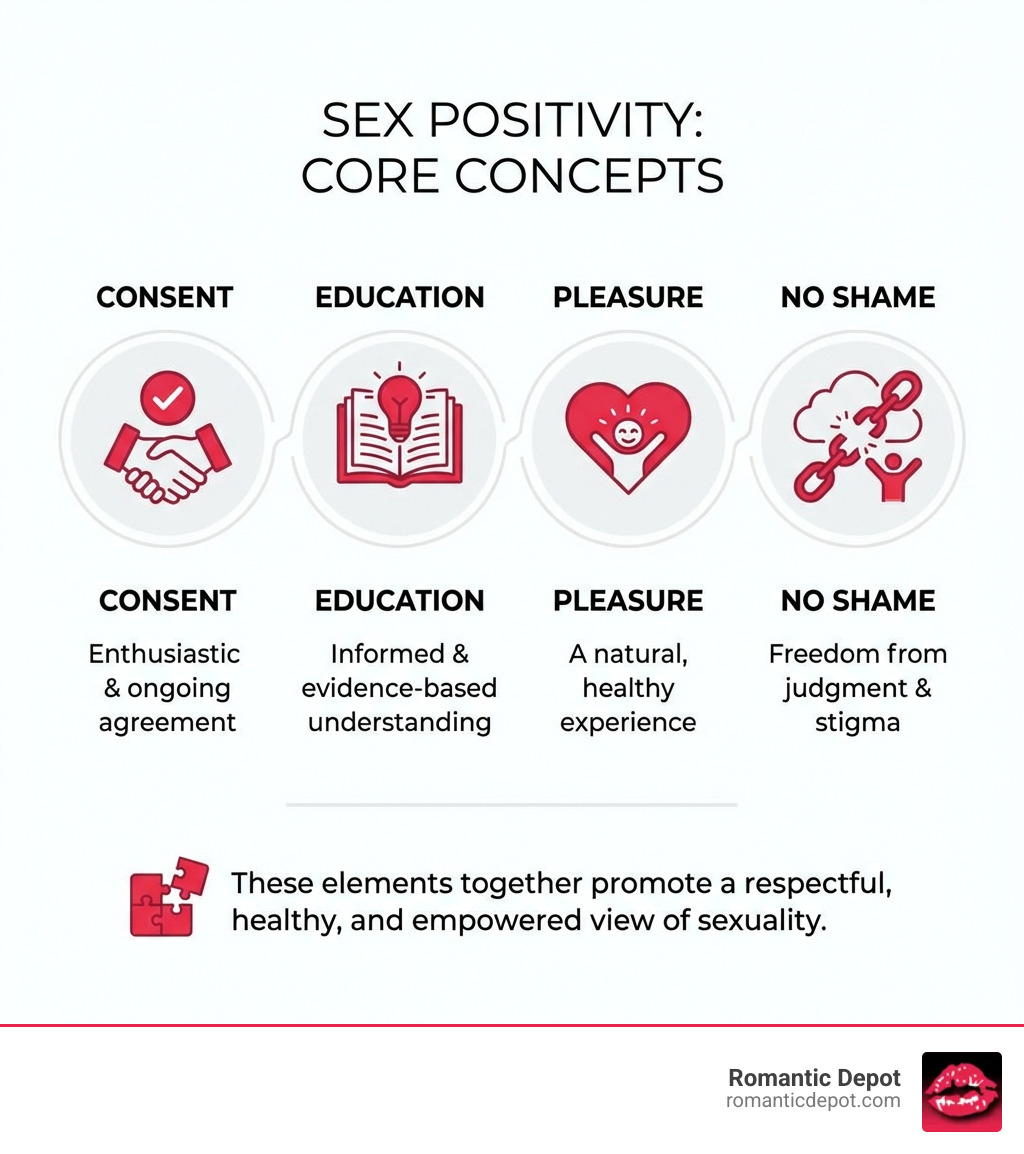
We’ve explored sex positivity beyond the buzzword, diving into its core definition, historical evolution, and profound impact on individuals and society. We’ve seen that it’s a movement built on the pillars of consent, comprehensive education, pleasure, and freedom from shame. It’s deeply connected to social justice, sexual violence prevention, and public health, empowering us all to accept our sexuality as a natural and healthy part of life.
The journey to a healthier, more liberated sexual self involves continuous self-reflection, education, and open communication. It means challenging ingrained biases, advocating for inclusive policies, and celebrating the diversity of human sexual expression.
At Romantic Depot, we are committed to supporting this journey. We pride ourselves on providing a welcoming and inclusive shopping experience for everyone exploring their sexuality, offering resources and products that align with the principles of Sex Positivity. We believe that by fostering an environment of acceptance and knowledge, we can help build a world where everyone can experience their sexuality with joy, respect, and freedom.