 SHOP NOW
 LOCATIONS




 cklimasz@gmail.com
Understanding Sexual Health: Your Foundation for Wellness and Happiness
Sexual Health is more than just avoiding disease—it’s about your complete physical, emotional, mental, and social well-being related to sexuality. According to the World Health Organization, sexual health requires a positive and respectful approach to sexuality and sexual relationships, as well as the possibility of having pleasurable and safe sexual experiences, free of coercion, discrimination, and violence.
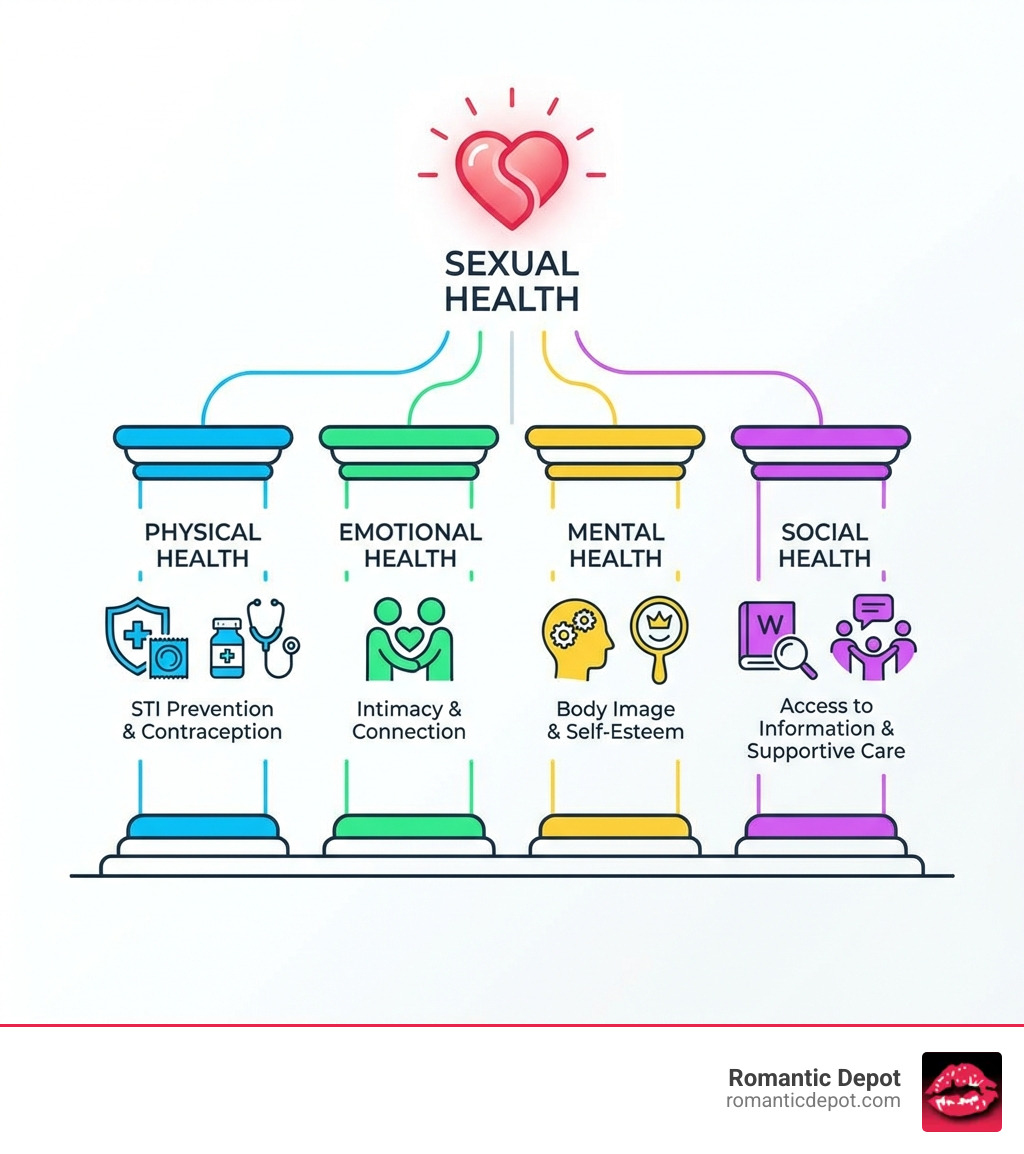
Key Components of Sexual Health:
- Physical Health – Prevention and treatment of STIs, access to contraception, and reproductive care
- Emotional Well-being – Healthy relationships, intimacy, and connection with partners
- Mental Health – Positive body image, self-esteem, and freedom from shame
- Social Factors – Access to information, supportive environments, and inclusive care
Sexual health touches every aspect of your life. It influences how you relate to others, how you feel about yourself, and your overall sense of happiness. When you prioritize sexual health, you’re investing in healthy relationships, better communication, and more fulfilling intimate experiences.
The reality is that many people never learned comprehensive sexual health information. Schools often focus narrowly on disease prevention, missing the bigger picture of pleasure, consent, communication, and relationship skills. That’s why having access to reliable information and quality resources matters so much.
At Romantic Depot, we’ve spent years advancing sexual health education and providing inclusive resources to thousands of individuals seeking safe, pleasurable intimate experiences. Our focus is on making sexual health information accessible to everyone, regardless of gender, orientation, or experience level.
This guide will walk you through everything you need to know—from understanding STI prevention and contraception options to accessing confidential support services and exploring pleasure safely. You’ll learn where to find help, how to communicate with partners, and how to make informed choices that support your well-being.
Understanding the Full Spectrum of Sexual Health
Sexual health is a vibrant, multifaceted aspect of our lives, far beyond just the absence of disease. It’s about embracing our sexuality in a positive and respectful way, fostering relationships built on trust and mutual pleasure, and feeling good about ourselves, inside and out. It’s a journey of self-findy and connection, impacting our overall health and happiness.

At its core, achieving sexual health means having access to comprehensive, good-quality information about sex and sexuality. It means understanding the risks and vulnerabilities associated with unprotected sexual activity, and crucially, having the ability to access sexual health care without judgment. It thrives in an environment that affirms and promotes sexual health for everyone.
This broad definition encompasses various personal and societal factors. It includes understanding and respecting diverse sexual orientations and gender identities, and recognizing that sexual expression is a fundamental part of human experience. It also means acknowledging the role of pleasure in healthy sexual relationships.
However, when sexual health is neglected, the consequences can be wide-ranging and severe. These can include sexually transmitted infections (STIs), reproductive tract infections (RTIs), and potentially life-threatening conditions. Untreated STIs, for example, can lead to serious health problems, including infertility. Other issues can include unintended pregnancies, certain cancers, and sexual dysfunctions. Beyond physical ailments, issues like sexual violence and harmful practices (such as female genital mutilation) are also critical components of the broader sexual health landscape.
MedlinePlus provides an excellent resource for understanding these basics, offering information on diagnosis, tests, and specific conditions. They even break down information for different age groups, from children and teenagers to men, women, and older adults, recognizing that sexual health needs evolve throughout our lives. This custom approach ensures that everyone can find relevant information to support their well-being.
Sexual Health Beyond STI Prevention
While preventing STIs is undoubtedly a critical part of sexual health , it’s just one piece of the puzzle. True sexual wellness extends into the fields of emotional connection, communication, and consent. It’s about building and maintaining healthy, respectful relationships where partners feel safe, valued, and understood.
Think about it: how often do we discuss the emotional satisfaction derived from intimacy, or the importance of clear, enthusiastic consent? These elements are fundamental to a positive sexual experience. Communication is key, allowing partners to express desires, boundaries, and concerns openly. This fosters a deeper connection and ensures that sexual encounters are pleasurable and safe for everyone involved.
Body image and self-esteem also play significant roles. Feeling comfortable and confident in our own skin improves our ability to enjoy sexual experiences and form healthy intimate bonds. Sometimes, relationships might hit a rut, and that’s perfectly normal. We’ve all been there! But with a little effort, you can always find ways to revive your relationship’s spark and bring that excitement back into your intimate life. It’s about nurturing all aspects of your sexual self, not just avoiding what could go wrong.
Proactive Protection: STIs and Contraception
Taking proactive steps to protect your sexual health is a sign of self-care and respect for your partners. This involves understanding common sexually transmitted infections (STIs) and utilizing effective contraception methods.
Common STIs include Chlamydia, Gonorrhea, and Syphilis. While these infections are treatable, if left unchecked, they can lead to serious health problems, including life-threatening infections and infertility. The Public Health Agency of Canada’s reports on STIs, for instance, highlight the ongoing prevalence of these infections. Although this specific data is Canadian, the nature of these STIs and their potential impact is universal.
A crucial aspect of STI awareness is recognizing their common symptoms. These can vary widely, from unusual discharge, itching, or sores to pain during urination or sex. However, and this is a significant point, many STIs are asymptomatic, meaning they show no symptoms at all. This makes regular testing incredibly important, as you could have an STI and unknowingly pass it on without ever feeling unwell.
The importance of early detection cannot be overstated. Catching an STI early allows for prompt treatment, preventing further complications and reducing the risk of transmission to others. Prevention strategies are straightforward yet highly effective: consistent and correct condom use is a cornerstone of STI prevention. Equally important is open and honest communication with your partners about your sexual health history and practices. It might feel awkward at first, but it’s a vital conversation for mutual well-being.
Your Guide to Birth Control Options
Navigating birth control can feel like a maze, but understanding your options is empowering. Our goal is to help you make informed decisions that align with your lifestyle and reproductive goals.

When we talk about reproductive choices, we’re talking about everything from preventing pregnancy to planning a family. Contraception plays a huge role in allowing individuals and couples to determine when and if they want to have children.
There’s a wide array of birth control options available, each with its own benefits and considerations:
- Barrier Methods: These physically block sperm from reaching an egg. Condoms (male and female) are the most common, offering the dual benefit of preventing both pregnancy and STIs. Diaphragms and cervical caps also fall into this category.
- Hormonal Methods: These work by releasing hormones (estrogen and progestin, or progestin only) to prevent ovulation, thicken cervical mucus, or thin the uterine lining. Options include birth control pills, patches, vaginal rings, injections (Depo-Provera), and hormonal implants.
- Long-Acting Reversible Contraceptives (LARCs): These are highly effective and convenient. Intrauterine Devices (IUDs), both hormonal and copper, are a prime example. Once inserted by a healthcare provider, they can prevent pregnancy for several years.
- Emergency Contraception: Sometimes referred to as the “morning-after pill,” this is used to prevent pregnancy after unprotected sex or contraceptive failure. It’s not a regular birth control method but an emergency backup.
Choosing the right method involves considering effectiveness, ease of use, potential side effects, and whether you also need STI protection.
Getting Tested and Treated for STIs
Taking charge of your sexual health means knowing where to go for testing and treatment when you need it. The good news is that there are many accessible resources offering confidential and non-judgmental care, ensuring your privacy and comfort.
You don’t need to feel embarrassed or ashamed. Healthcare professionals are there to help, not to judge. Many individuals rely on their family doctors for initial STI screenings and advice. However, if you prefer a more specialized or anonymous setting, community health centers and public health clinics are excellent options.
In New York City, for instance, the NYC Department of Health operates several Sexual Health Clinics that provide free and low-cost services. Similarly, in Westchester County, the Department of Health offers Sexual Health services, and Rockland County also has clinics and immunization services that address sexual health needs. For those in New Jersey, we recommend checking your specific county’s health department website for local clinics and services.
These clinics typically offer a range of services including confidential STI testing, treatment for various infections, birth control counseling, and emergency contraception. Some even offer “Easy Screen STI testing” for individuals without symptoms, making it quicker and simpler to get checked. The key is to remember that these services are designed to be accessible to everyone, often without the need for a referral or even a health card.
Accessing Support: Your Guide to Sexual Health Services
Navigating sexual health can sometimes feel overwhelming, but you’re not alone. There’s a wealth of support available to help you make informed decisions and get the care you need.
Confidential Helplines and Online Support
For those moments when you have questions but aren’t ready to visit a clinic, or simply need quick, reliable information, confidential helplines and online support services are invaluable. While specific helplines like Sexual Health Infoline Ontario (SHILO) serve their respective regions, the concept of such services is universally beneficial.
These services typically offer free, anonymous support via phone or eChat, staffed by trained counselors. They can discuss a wide range of topics, including STIs, HIV prevention (like PrEP and PEP), birth control options, emergency contraception, and planned or unplanned pregnancies. Many also provide inclusive support for 2SLGBTQ+ individuals and discuss relationship concerns, sexual orientation, and gender identity. A significant benefit is often the availability of multi-lingual support, ensuring that language isn’t a barrier to accessing vital information. These services are excellent for information and referrals, though they are usually not primary crisis lines.
Navigating Local Clinics and Community Centres
When it comes to in-person care, local clinics and community health centers are pillars of sexual health support. A key advantage of many of these centers is their commitment to accessibility, often providing services regardless of your insurance status or whether you have a health card. This inclusivity ensures that everyone in communities like New York City, Brooklyn, Queens, The Bronx, Westchester County, Rockland County, and throughout New Jersey can access necessary care.
These clinics typically offer a comprehensive suite of services:
- Testing and Treatment: For STIs and HIV, often with rapid testing options.
- Counselling: Providing support and information on sexual health, relationships, and risk reduction.
- Low-Cost Birth Control: Ensuring that contraception is affordable and accessible.
- IUD Services: Including counseling, insertion, checks, and removals of long-acting reversible contraception.
- Pregnancy Services: Offering testing, counseling, and referrals for planned or unplanned pregnancies.
While our research mentioned services like the Street Outreach Van in other regions, similar initiatives may exist in local areas to reach vulnerable populations. It’s always a good idea to check with your local health department or community organizations in New York and New Jersey for specific programs and locations. For example, the NYC.gov Sexual Health Clinics offer a wide range of services designed to be accessible to all city residents.
Resources for Educators and Youth
Educating the next generation about sexual health is paramount. Comprehensive sexuality education in schools provides young people with accurate, age-appropriate information, helping them make responsible decisions and understand their bodies and relationships.
Resources are often available for educators to support them in teaching these crucial topics. This can include curriculum materials, training, and support networks. Research, such as the article on school-based and animation-based comprehensive sexuality education, highlights the importance of effective educational approaches. Promoting comprehensive sexuality education ensures that youth receive vital information on consent, healthy relationships, contraception, STI prevention, and body image, fostering a foundation for lifelong sexual wellness.
Cultivating Pleasure and Intimacy
Beyond the clinical aspects of sexual health, lies the rich landscape of pleasure and intimacy. This is where our personal journey truly flourishes, embracing joy, connection, and self-expression.
Cultivating pleasure and intimacy begins with strong communication with partners. Open dialogue about desires, boundaries, and comfort levels builds trust and deepens connection. It’s about creating a safe space where both partners feel heard and understood. Sometimes, couples face challenges like incompatible sex drives, but there are always seven tips for dealing with incompatible sex drives that can help bridge the gap.
Exploring desires and fantasies together can add excitement and novelty to your intimate life. It’s a wonderful way to learn more about each other and deepen your bond. We believe that everyone deserves a fulfilling sex life, and there are many ways to realize your sexual fantasies with your partner safely and consensually. If things feel a little stale, don’t worry, it happens to the best of us! Learning how to spice up your sex life can be a fun adventure for both of you.
Exploring with Adult Toys for Improved Sexual Health
One fantastic way to improve pleasure and intimacy, both solo and with a partner, is through the thoughtful use of adult toys. These tools are designed to amplify sensations, aid exploration, and add a playful dimension to your sexual experiences.
It’s no secret that adult toys have become increasingly popular, with Gen Z and Millennials embracing sex toys in their relationships as a way to explore pleasure and connect. From the gentle hum of a vibrator to the satisfying sensation of a dildo, there’s a world of options waiting to be finded. If you’re curious about where to start, our ultimate guide to vibrators is a great resource. And for couples looking to explore together, there are many incredible sex toys for couples designed to bring you closer.
When incorporating toys into your routine, safety and hygiene are paramount. Always opt for products made from the safest sex toy materials to protect your body. And just like any other personal item, proper cleaning is essential. We have excellent tips for cleaning sex toys to ensure they remain hygienic and last longer. At Romantic Depot, we pride ourselves on offering a wide selection of high-quality adult toys to support your journey to improved pleasure and intimate connection.
Frequently Asked Questions about Sexual Health
We understand that you might have specific questions about sexual health. Here are answers to some common inquiries to help guide you.
What are the first steps to take if I think I have an STI?
If you suspect you might have an STI, the first and most important thing is not to panic. Many STIs are treatable, and early detection is key. Your immediate steps should be:
- Abstain from sexual activity: This prevents potential transmission to others.
- Contact a healthcare provider or clinic: Reach out to your family doctor, a local community health center, or a public health clinic in your area (like those in NYC, Westchester, or Rockland counties). Explain your concerns and request an STI screening.
- Get tested: Follow through with all recommended tests. Be honest with your healthcare provider about your sexual history to ensure accurate testing.
- Inform partners (if diagnosed): If you are diagnosed with an STI, your healthcare provider will guide you on how to inform your recent sexual partners so they can also get tested and treated. This is a critical step in preventing further spread.
Seeking help is a responsible and brave action for your sexual health.
How do I talk to my partner about our sexual health history?
Talking about sexual health history with a partner can feel daunting, but it’s a crucial step in building trust and ensuring mutual well-being.
- Choose a calm, private moment: Avoid bringing it up during an argument or right before intimacy. Find a time when you can both focus without distractions.
- Be open and honest: Share your own sexual health history clearly and concisely.
- Use “I” statements: Frame your concerns around your feelings, e.g., “I feel it’s important for us to discuss our sexual health histories for our mutual safety.” This helps avoid accusatory language.
- Focus on health and safety, not judgment: Emphasize that this conversation is about protecting both of you and ensuring a healthy, comfortable sexual relationship.
- Be prepared to listen: Give your partner space to share their history and concerns without interruption or judgment.
- Consider getting tested together: Suggesting joint STI testing can be a proactive way to address concerns and reinforce your commitment to each other’s Sexual Health.
Are sexual health clinic services confidential, especially for teens?
Yes, confidentiality is a cornerstone of sexual health services, and this applies especially to teens. Healthcare providers understand the sensitive nature of these topics and are legally and ethically bound to protect your privacy.
- Confidentiality is a cornerstone: Clinics operate under strict privacy laws (like HIPAA in the US) to ensure that your information is kept private.
- Services are non-judgmental: The staff are trained to provide care without judgment, creating a safe space for everyone to seek help.
- Legal rights to privacy: Minors in many states, including New York and New Jersey, have legal rights to confidential sexual health services without parental consent for things like STI testing and treatment, and contraception. This is designed to encourage teens to seek necessary care without fear of their parents being informed, which could otherwise deter them and lead to untreated health issues.
- Encourages seeking help without fear: The promise of confidentiality is vital because it ensures that individuals, particularly young people, feel comfortable seeking help for sensitive issues, ultimately promoting public health.
If you have concerns about confidentiality, you can always ask the clinic staff about their specific policies before receiving services.
Conclusion: Accept Your Path to Sexual Wellness
Our journey through sexual health has shown us that it’s a comprehensive, lifelong endeavor—a beautiful blend of physical well-being, emotional connection, mental peace, and social support. It’s about moving beyond just avoiding problems and actively embracing pleasure, intimacy, and respect in all aspects of your sexuality.
Empowerment through knowledge is your greatest tool. By understanding your body, knowing your options for protection and care, and feeling confident in communicating with partners, you’re building a foundation for a truly fulfilling intimate life. Prioritizing pleasure and safety isn’t just a suggestion; it’s a pathway to deeper happiness and healthier relationships.
At Romantic Depot, we are passionate about supporting your journey to sexual health and happiness. We believe that exploring pleasure, whether solo or with a partner, is a vital part of overall wellness. From educational resources to a wide array of adult toys designed to improve your intimate experiences, we’re here to help you find new dimensions of joy and connection.
Ready to explore further? Explore our Sex How-To Info for more insights and guidance. And when you’re ready to bring a little more excitement into your life, we invite you to visit our homepage to start exploring our curated selection of products that cater to every desire. Your path to sexual wellness and happiness is unique, and we’re honored to be a part of it.