 SHOP NOW
 LOCATIONS



 Romantic Depot Sexologist
Understanding Different Types of Relationship Quizzes and Their Purpose
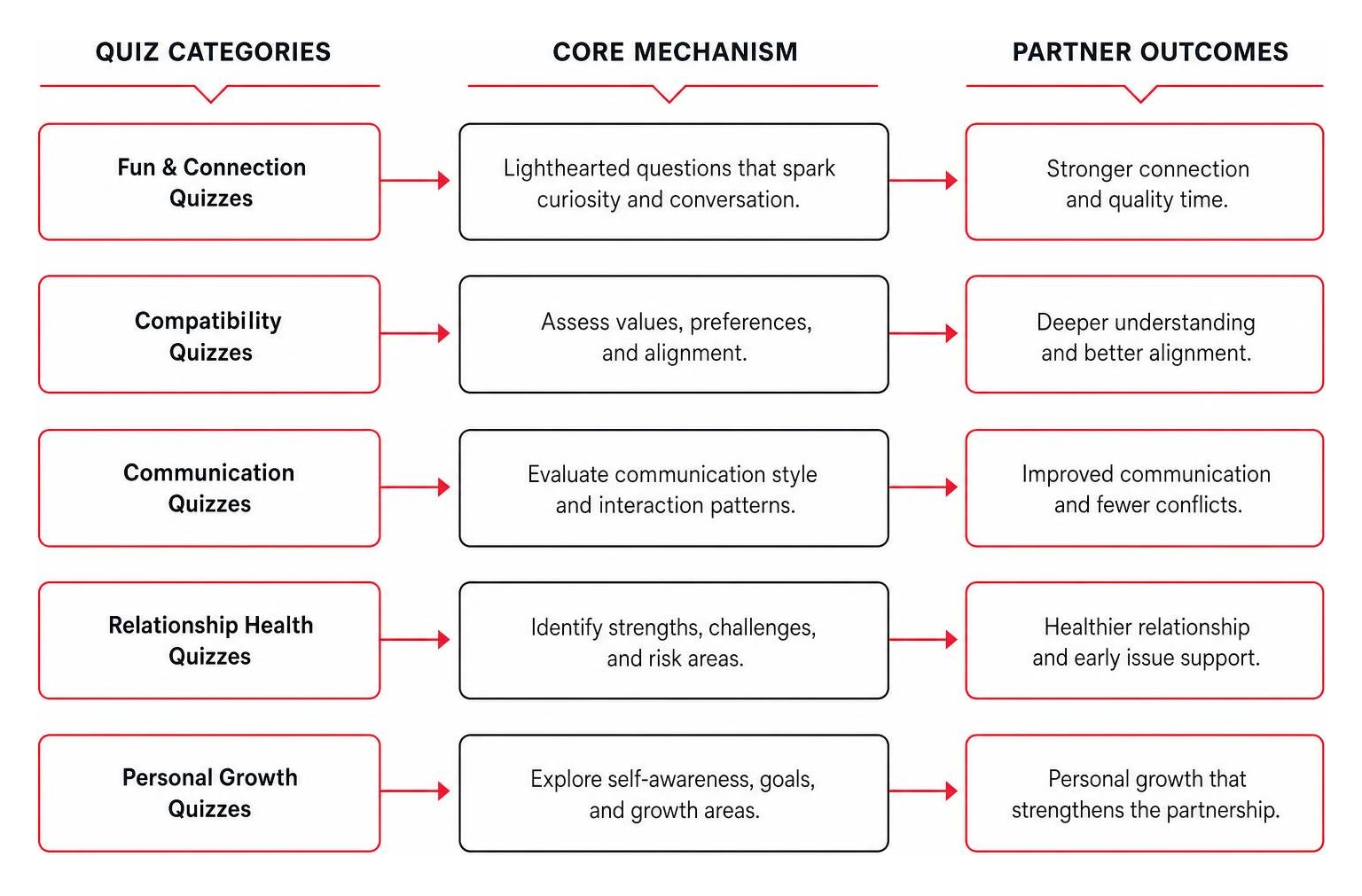
The landscape of modern dating and long-term partnerships is vast, and so are the tools we use to navigate it. A relationship quiz isn’t a one-size-fits-all tool. Depending on what you are hoping to discover, online assessments fall into distinct quiz categories ranging from casual self-discovery tools to clinical emotional audits.
Understanding the purpose behind each assessment ensures you get meaningful insights out of the experience. Research from the Gottman Institute—the premier relationship research center built on over four decades of scientific work with thousands of couples—emphasizes that the quality of friendship between partners is one of the most critical components of a lasting relationship. Many quizzes focus specifically on this underlying bond, giving couples a structured way to practice what Gottman calls “Small Things Often”—building intimate connection through everyday curiosity.
Whether you are using a quiz for date night entertainment, maintaining a long-distance connection, or evaluating whether your relationship is a safe and supportive space, selecting the right quiz type is your first step.
Types of Assessments: From Knowledge Games to Emotional Audits
To choose the right assessment, it helps to understand how different formats function:
- Partner Knowledge and Trivia Games: Modeled after the classic Newlywed Game format, these assessments test how well you remember your partner’s habits, pet peeves, go-to comfort foods, and shared relationship memories.
- Relationship Style and Compatibility Quizzes: Scenario-based questionnaires designed to identify your “default operating system” in love. These look at how you react during arguments, how you express affection, and how you handle emotional vulnerability.
- Relationship Health and Safety Audits: Structured self-assessments that screen for relationship balance, communication yellow flags, and safety red flags.
Different tools suit different stages of a relationship. For example, interactive options like the Couples Quiz: How Well Do You Know Me? offer a frictionless way to play trivia over text without app downloads. Data shows that 41% of users who take lighthearted partner tests are couples on date night looking for laughs and easy conversation starters. Meanwhile, 34% of users are long-distance partners using these games to bridge physical distance by testing day-to-day details and shared memories.
| Quiz Type | Primary Purpose | Ideal Use Case | Key Metrics Assessed |
|---|---|---|---|
| Partner Trivia & Knowledge | Test recall of preferences & history | Date nights, long-distance check-ins | Personal habits, shared memories, favorite things |
| Relationship Style & Archetype | Identify conflict and attachment styles | Defining relationship dynamics, self-discovery | Conflict reflexes, communication style, needs |
| Relationship Health & Safety | Screen for unhealthy patterns & safety | Resolving mixed signals, emotional audits | Trust, respect, boundaries, red vs. yellow flags |
| Intimacy & Sexual Compatibility | Align on physical connection & desires | Revamping romance, bedroom exploration | Sexual self-care, intimate needs, shared desires |
How a Relationship Quiz Evaluates Friendship and Attachment Style
Beyond testing trivia, sophisticated quizzes evaluate how you and your partner navigate life together. Rooted in psychological concepts like attachment theory and the Gottman Method, these tests assess your emotional availability and default emotional reflexes.
Your relationship style acts as an operating system shaped by past experiences and upbringing. Quizzes often categorize partners into distinct relational styles:
- The Nurturer: Naturally intuitive and caring, but prone to suppressing personal needs to keep the peace.
- The Anchor: Grounded, stable, and calm during conflict, though sometimes hesitant to jump into spontaneous emotional expression.
- The Spark: Passionate and energetic, driving romance forward but occasionally mistaking routine calm for a lack of intimacy.
- The Navigator: Analytical and structured, excellent at solving practical problems but needing practice sitting with raw emotion.
Assessments also draw upon famous psychological exercises, such as those inspired by Arthur Aron’s research—often popularized through tools like Try the 36 Questions on the Way to Love. These exercises bypass surface-level small talk to foster deep vulnerability, demonstrating that deep intimacy is built through sustained, mutual self-disclosure.
Evaluating Health vs. Red Flags: What a Relationship Quiz Reveals

While many tests are lighthearted, a comprehensive relationship quiz can serve as an essential reality check. When dynamic tension enters a partnership, it can be hard to judge whether you are experiencing typical relationship stress or navigating unhealthy patterns.
User cohort data reveals that 41% of individuals who take an Is My Relationship Healthy Quiz: 10 Signs to Check do so because they sense something is off—such as frequent tension, walking on eggshells, or mixed messages—and want clarity. Similarly, 44% of users taking targeted clarity quizzes are trying to determine if a partner’s actions match their words when receiving mixed signals.
Key Indicators of Relationship Health: Trust, Respect, and Intimacy
A balanced relationship assessment measures key pillars of long-term stability:
- Care & Commitment: Effort, consistency, and showing up during difficult moments.
- Emotional Safety & Availability: Feeling comfortable sharing fears, mistakes, and desires without fear of harsh judgment or retaliation.
- Respect & Boundaries: Honoring individual autonomy, privacy, friends, and personal time.
- Conflict Repair: The ability to de-escalate fights and listen without becoming overly defensive.
Physical and emotional intimacy are deeply interconnected. As we discuss in A Deep Dive into Couples Intimacy and Why It Matters, true intimacy requires a safe container built on trust and mutual respect. When emotional safety is intact, physical connection, sexual health, and bedroom exploration naturally flourish.
Identifying Unhealthy Patterns and Coercive Control
The most critical function of a health-focused relationship quiz is identifying red flags and coercive control tactics that might otherwise be normalized over time. Unhealthy dynamics often build gradually, making diagnostic questions vital for self-protection.
Key red flags highlighted by relationship screening assessments include:
- Digital Abuse & Monitoring: Demanding social media passwords, going through personal phones, installing tracking software, or constantly texting with the expectation of immediate responses.
- Social Isolation: Guilt-tripping you for spending time with family or friends, or claiming your loved ones are “trying to turn you against them.”
- Image-Based Abuse: Threatening to share private, intimate photos or videos without consent (which is a serious violation and a crime in many jurisdictions).
- Gaslighting & Minimization: Telling you to “stop playing the victim” or insisting you are making a big deal out of deliberate disrespect.
- Coerced Consent: Guilting or pressuring you into physical or sexual acts you aren’t comfortable with. Authentic consent is freely given and can be withdrawn at any time.
If an assessment highlights severe red flags, physical violence, or coercive control, it is essential to prioritize your safety and seek professional crisis resources rather than attempting to resolve these issues through simple home communication exercises.
Using Your Relationship Quiz Results to Deepen Intimacy and Connection
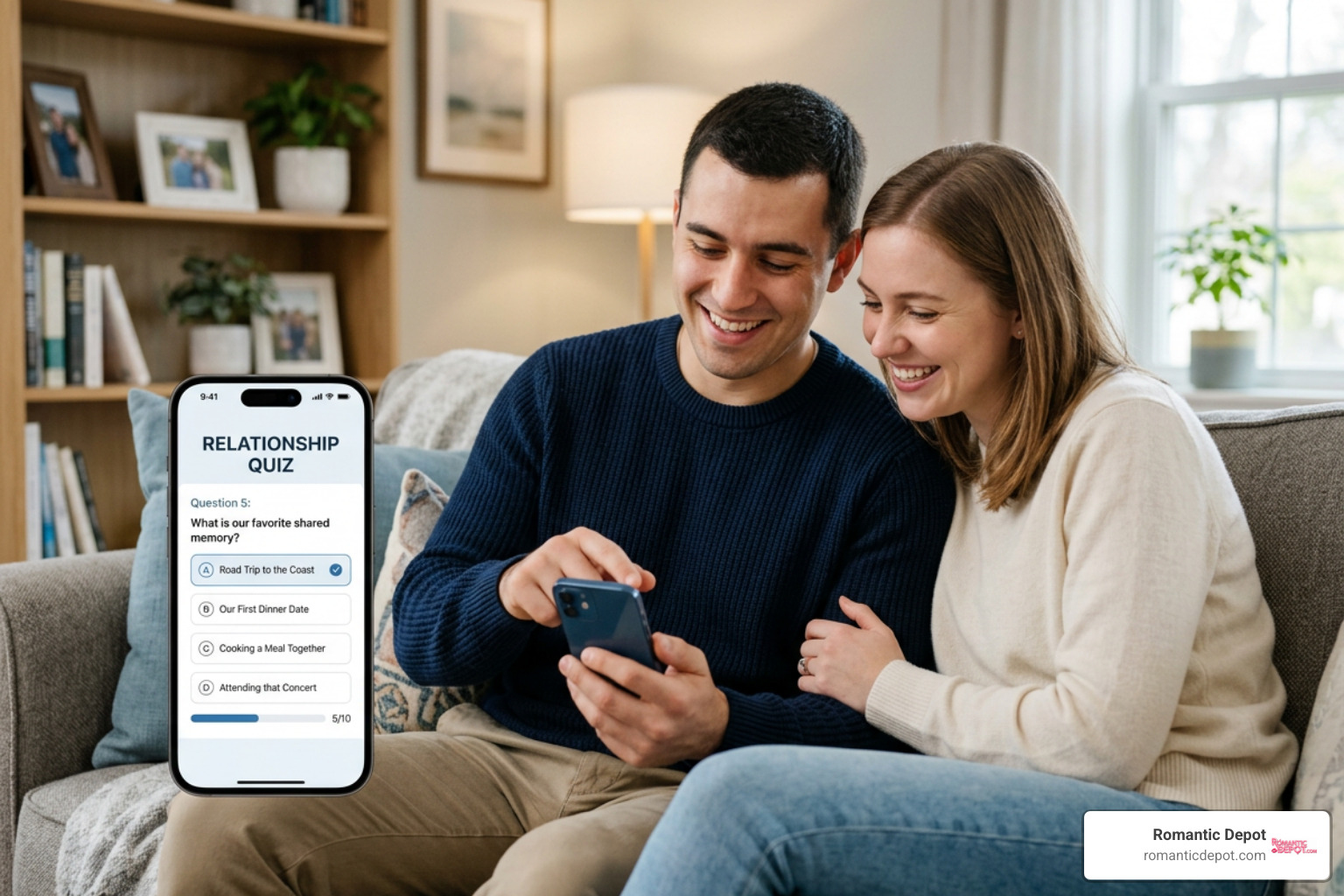
Taking a relationship quiz is only the beginning. The real value lies in what you do with the results. Once the score is calculated, you have a natural, non-confrontational bridge to discuss your partnership openly.
Relationship Quiz Time: Which Habit Matters Most?
Before diving into deeper reflection, try this quick relationship quiz prompt with your partner or share it on social media:
Which of these habits has the biggest impact on a happy, healthy relationship?
A. Saying “thank you” every day
B. Putting your phone away during quality time
C. Laughing together often
D. Listening without interrupting
Answer: There isn’t just one. Research shows that all four habits contribute to stronger, healthier relationships. Small, consistent acts of appreciation, focused attention, shared laughter, and active listening help build lasting trust and emotional connection. Healthy relationships are built one positive habit at a time.
This kind of simple prompt works well because it turns relationship advice into a low-pressure conversation starter. Instead of asking, “Are we doing enough?” it invites both partners to notice the everyday habits that make them feel loved, respected, and emotionally safe.
Turning Relationship Quiz Insights into Meaningful Conversations
Rather than viewing quiz results as a final score or judgment, use them as conversation starters. If you and your partner score differently in specific areas—such as how you handle stress or express affection—treat that mismatch as a point of curiosity rather than conflict.
Here is how to approach post-quiz conversations constructively:
- Focus on Shared Reflection: Ask questions like, “I noticed we answered differently about how we like to spend our weekends—what does a relaxing break look like to you right now?”
- Practice Non-Defensive Listening: If your partner indicates a desire for better communication or more quality time, avoid making excuses. Listen to understand their emotional perspective.
- Use ‘I’ Statements: Express your emotional needs directly. For example, replace “You never plan dates” with “I’d love it if we set aside one night a week just for the two of us.”
Addressing emotional gaps makes space for wellness and exploration in all areas of your life together. For more insights on holistic connection, check out our guide on Pleasure Wellness 101: Everything You Need to Know.
Enhancing Sexual Health and Intimacy with Couples Sex Toys
Once you’ve strengthened emotional connection and established clear boundaries, bringing fresh energy into the bedroom is a fun way to celebrate your bond. Sexual health is a fundamental pillar of overall wellbeing, as detailed in our guide on What is Sexual Health? Unpacking the Essentials for a Fulfilling Life.
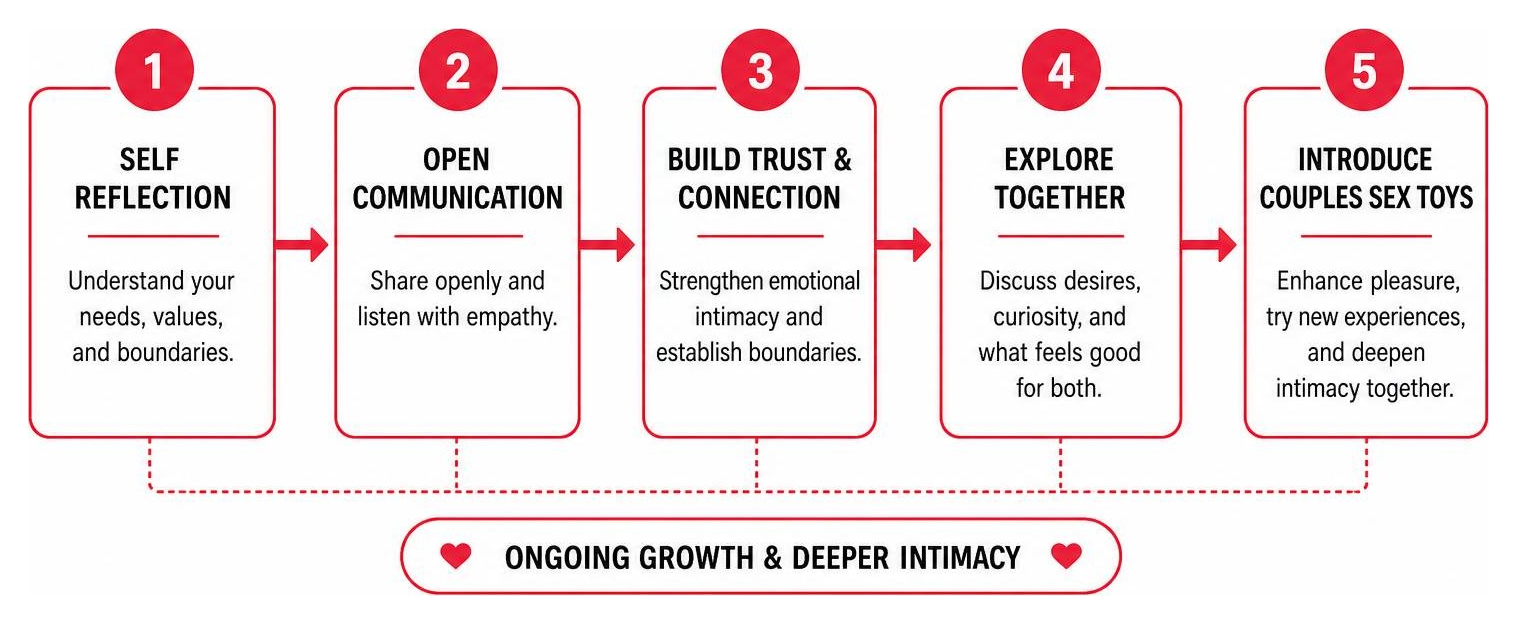
Introducing couples sex toys into your routine can help reignite excitement, enhance physical pleasure, and encourage open conversation about desires:
- Remote-Controlled & App-Enabled Vibrators: Perfect for long-distance partners looking to maintain physical play from afar or couples wanting to add excitement to date nights out across New York City or New Jersey.
- Wearable Couples Massagers: Designed to be used together during intercourse, providing hands-free stimulation for both partners simultaneously.
- Sensual Wellness Accessories: Luxurious massage oils, premium body-safe lubricants, and blindfolds create a sensory, pressure-free environment for physical bonding.
At Romantic Depot, we help couples explore intimacy safely and comfortably. This weekend only, shoppers can save with 70% off select in-store items, 50% off 1-hour delivery, and special savings on all online orders. Whether you visit our premier megastore locations in Brooklyn, Queens, Manhattan, the Bronx, Westchester, or New Jersey, browse online at RomanticDepot.com, or use fast 1-hour delivery in participating areas, our team provides an inclusive space to support your intimate journey.
Limitations of Online Quizzes and When to Seek Professional Support
While a relationship quiz is a useful tool for self-reflection, it has clear limits. Online questionnaires cannot replace professional clinical judgment, couples therapy, or individual counseling.
Online quizzes should be used for personal insight and voluntary discussion. They cannot diagnose mental health conditions, guarantee whether a relationship will endure, or resolve deep-seated trauma.

It is time to look beyond online quizzes and connect with professional support—such as licensed couples counselors listed through resources like Find Therapists and Counselors in Rockland County, NY—when:
- Arguments repeatedly escalate into screaming, contempt, or silent treatments without resolution.
- You or your partner feel constant anxiety, loss of personal autonomy, or feel like you are walking on eggshells.
- There is a persistent breach of trust, such as infidelity or hidden financial secrets, that you cannot navigate alone.
- You feel afraid of your partner’s temper or reactions.
As featured in assessments like the NYT’s How Strong Are Your Relationships? Take the Quiz., strong personal relationships require active maintenance. Recognizing when to seek expert guidance is a sign of strength, not failure.
Frequently Asked Questions About Relationship Quizzes
Can a relationship quiz accurately predict whether a couple will stay together?
No. An online quiz offers a snapshot of your relationship health and perceptions today. It cannot predict the future because relationships evolve based on ongoing effort, communication, and mutual commitment. Research shows that how couples handle differences over time matters far more than initial score compatibility.
What should we do if my partner and I get very different quiz scores?
Mismatched scores are completely normal and offer a great learning opportunity. Differing scores usually mean you have different emotional operating systems, communication preferences, or conflict styles. Use score differences to ask curious, non-judgmental questions about how your partner experiences the relationship.
How often should couples take a compatibility or relationship health test?
Taking a check-in quiz every six to twelve months—or during major life transitions like moving in together, career shifts, or long-distance periods—can be a helpful ritual. It gives you a structured temperature check on your evolving dynamic over time.
Conclusion

A relationship quiz is much more than a distraction—it is a tool for self-reflection, emotional clarity, and mutual growth. Whether you are using a knowledge game to share a few laughs on date night, exploring your relational attachment style, or evaluating relationship safety and health, these assessments give you a language for deeper connection.
Healthy relationships aren’t built on finding someone identical to you. They thrive when two people show up with trust, respect, open communication, and a willingness to explore life—and intimacy—together.
Ready to take your bond to the next level? Explore our expert guides on intimate wellness on the Romantic Depot Homepage or stay up to date with the latest insights by following our Sexual Health and Wellness News. Whether you visit our Brooklyn flagship store or any of our locations across New York and New Jersey, we are here to support your journey toward a healthier, more fulfilling relationship.