 SHOP NOW
 LOCATIONS




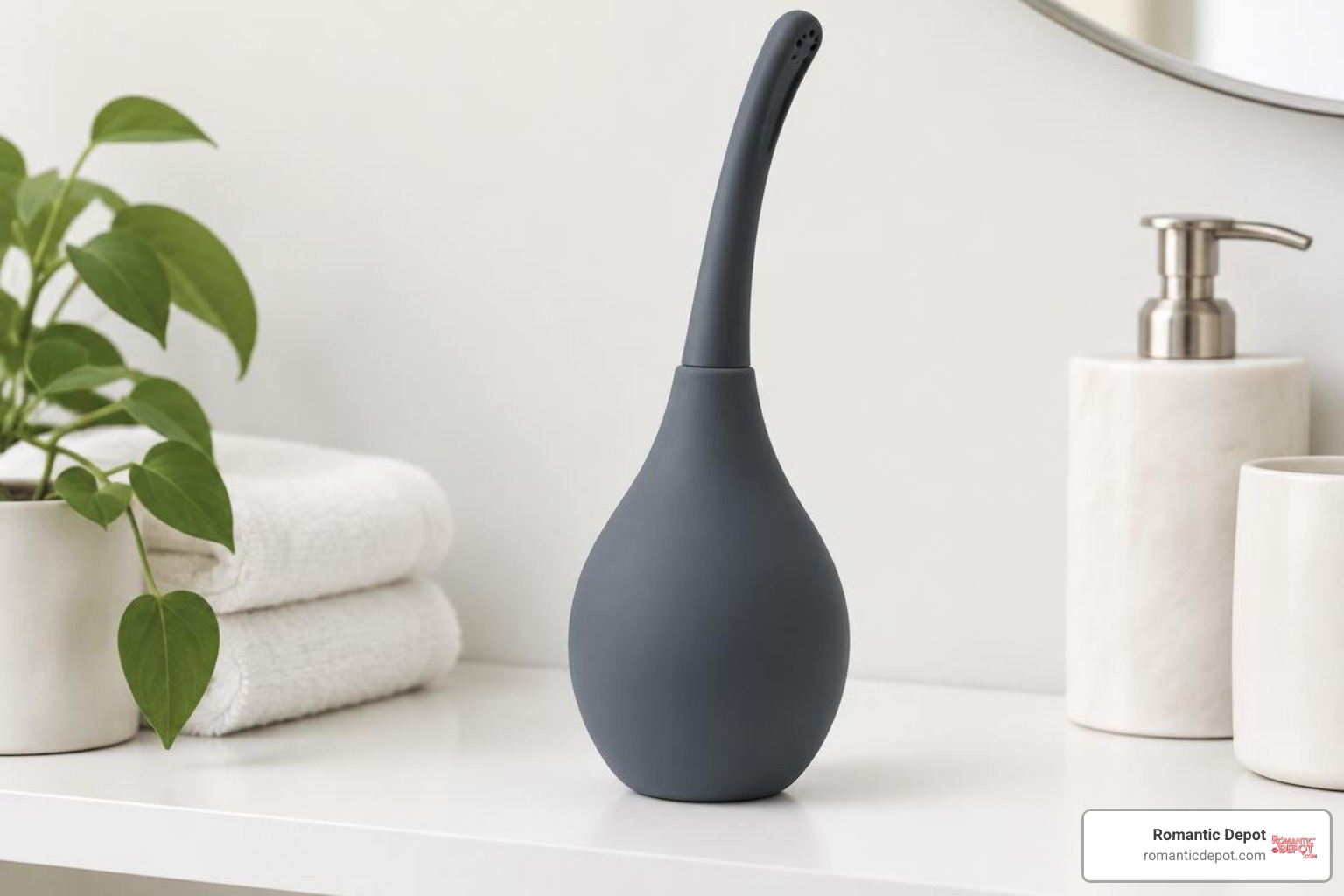
 Romantic Depot Sexologist
How to Use an Anal Douche Enema Safely
To use an anal douche enema, fill a clean, small bulb with lukewarm water. Lubricate the tip, insert it gently, squeeze slowly, then let the water drain into the toilet. Give yourself time to pass any remaining water before anal play. Stop if you feel pain or notice bleeding.
Douching is a personal choice, not a requirement for anal sex. A gentle, shallow rinse is enough if you choose to do it; deep flushing, high pressure, and harsh solutions can cause irritation.
At Romantic Depot, our dedication to sexual wellness education shapes this practical guide to anal douche enema use, with comfort and harm reduction in mind.
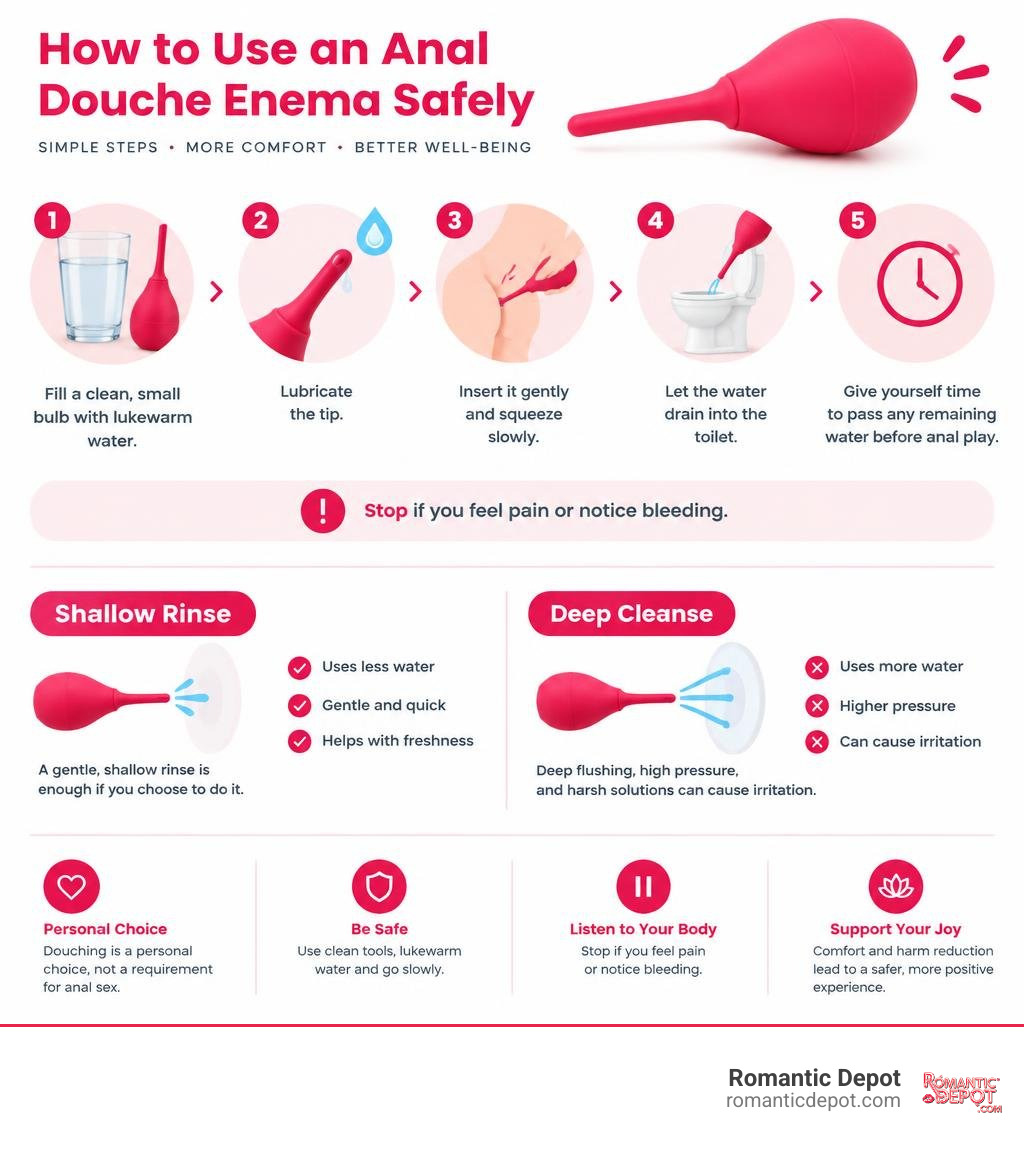
Anal douche enema basics:
What Is Anal Douching and Is It Necessary for Anal Play?
At Romantic Depot, we believe intimate pleasure thrives when you feel confident, relaxed, and fully informed about your body. Anal douching involves introducing a small volume of liquid—typically body-temperature water or isotonic saline—into the lower rectum using a dedicated bulb or nozzle to rinse away residual fecal matter. While many people view it as standard pre-play preparation, it is never an absolute physical requirement for receptive anal intimacy.
Understanding whether you should douche begins with basic anatomy. The rectum is not a continuous storage tank for waste; its primary role is to serve as a transit corridor. Feces is stored higher up in the sigmoid colon and only moves downward into the rectal vault when your body is naturally ready for a bowel movement. Once you have had a complete bowel movement, the distal rectum is often naturally empty.
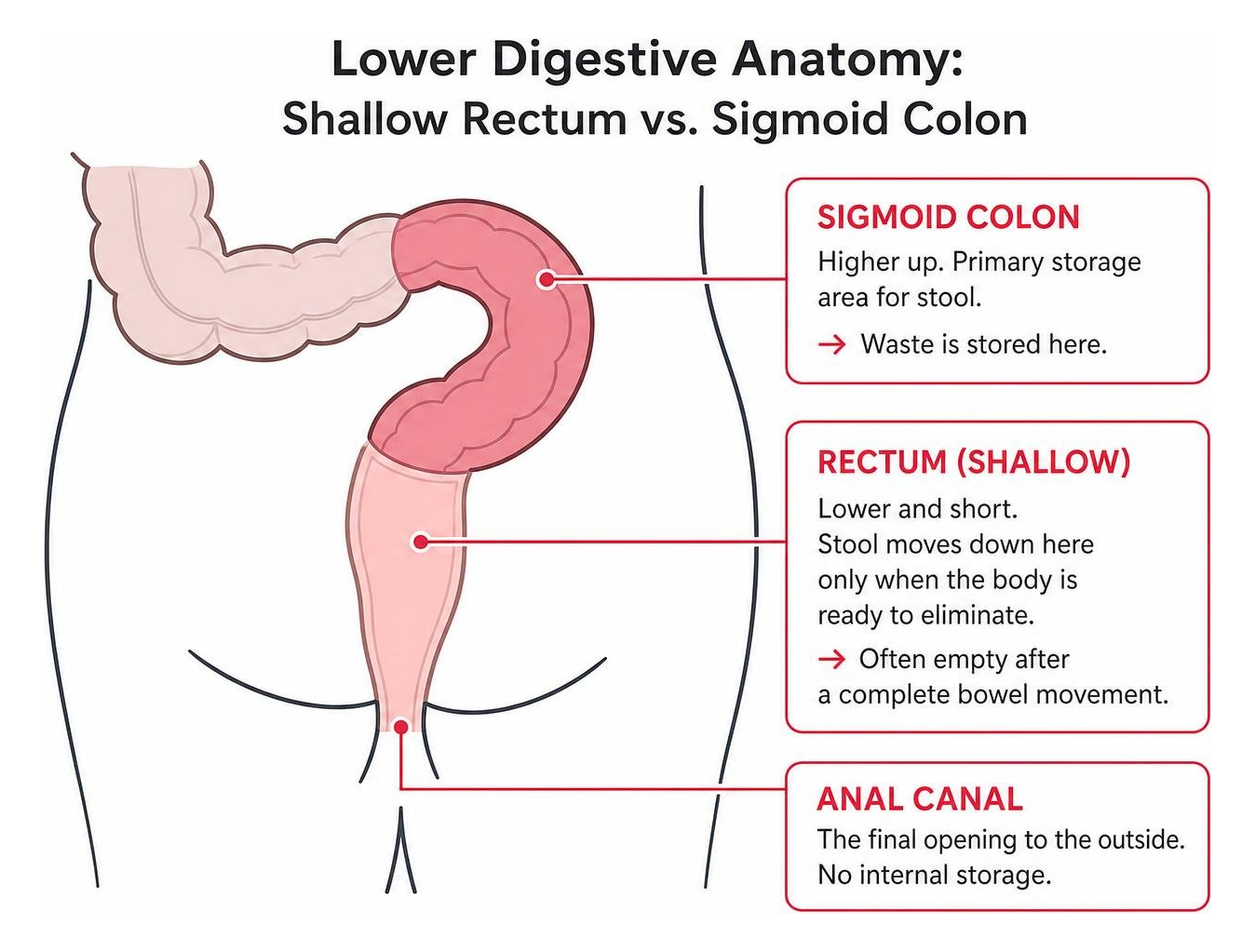
Because the anal canal does not produce its own lubrication, the body relies on delicate mucous membranes to maintain tissue integrity. Medical organizations, including educators offering guidance on whether douching is required before anal sex, emphasize that internal cleaning is entirely optional. When you practice good holistic hygiene and consult our guide below the belt: a complete guide to maintaining intimate health, you can easily decide what routine best supports your body.
Psychological Comfort vs. Physical Necessity
The decision to douche often centers on mental peace rather than physical mechanics. Worrying about potential accidents can cause involuntary tension in the pelvic floor muscles, making penetration uncomfortable or painful. For many individuals, taking a few minutes to complete a quick rinse eliminates performance anxiety, allowing them to relax and enjoy the moment.
Open communication with your partner is just as effective as any cleansing routine. Anyone engaging in anal play should understand that bodies are natural, and minor smudges occasionally happen. Removing shame from the equation creates a safer, far more satisfying intimate dynamic.
Understanding Rectal Physiology
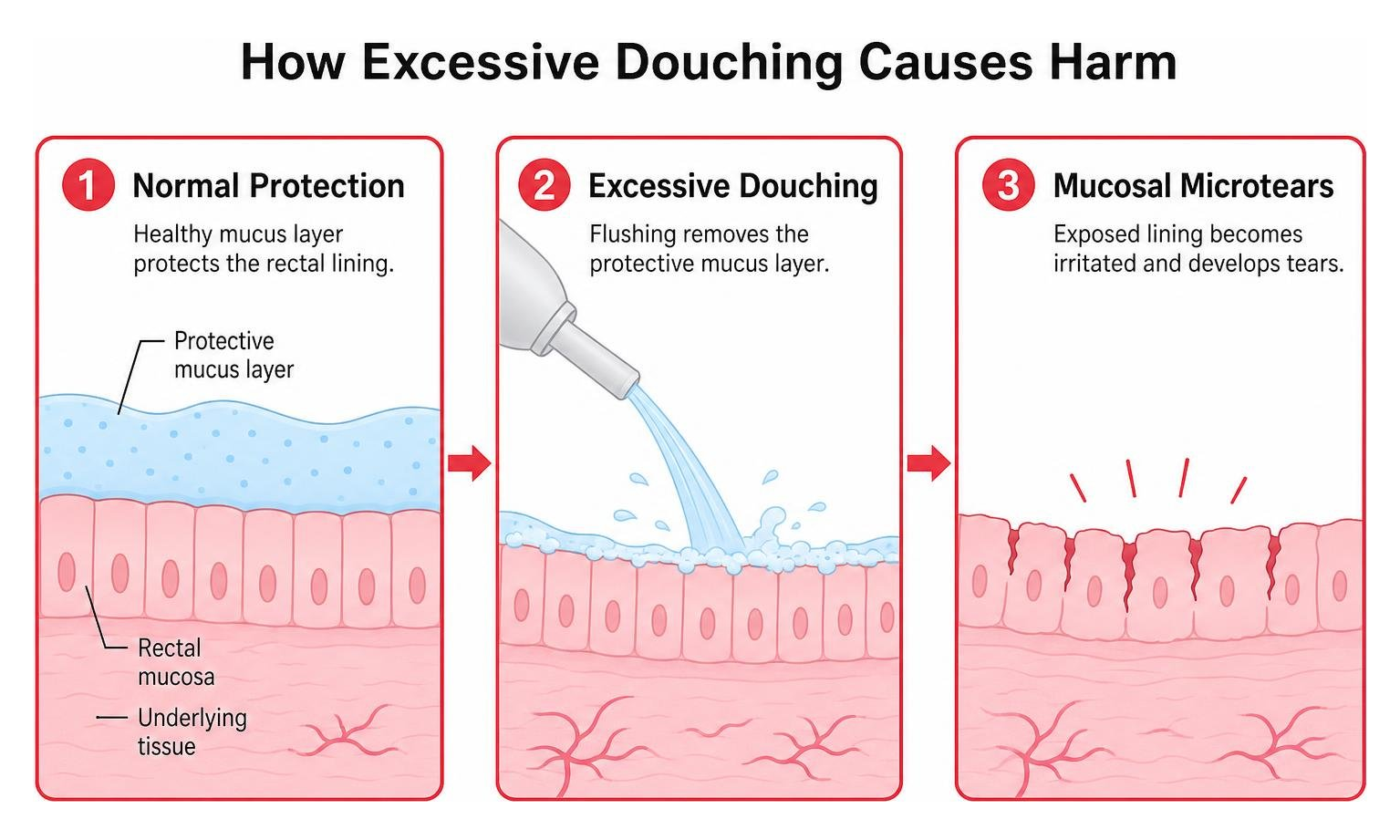
The lining of the rectum consists of a delicate single layer of columnar epithelial cells coated in protective mucus. This barrier prevents harmful bacteria from crossing into the bloodstream while supporting a balanced local microbiome.
When you introduce fluid into the rectum, the goal is simply to rinse this lowermost chamber. If you use excessive fluid or force water past the rectosigmoid junction into the sigmoid colon, you trigger natural peristalsis—wave-like muscle contractions that push higher, unformed fecal matter down. This creates the exact mess you were trying to prevent while stripping away the protective mucous layer.
Types of Devices: Choosing the Best Anal Douche Enema
Selecting the correct hardware is essential for both comfort and safety. Using improvised tools, such as unscrewed shower hoses or harsh clinical kits, significantly raises the risk of tissue damage.
| Device Type | Typical Volume | Pressure Control | Safety Profile | Best Suited For |
|---|---|---|---|---|
| Silicone Bulb Douche | 3 to 8 oz (89–236 mL) | Manual squeeze (High control) | Very High (Gentle on tissue) | Beginner to advanced pre-sex prep |
| Pre-Packaged Saline Enema | 4.5 oz (133 mL) | Single-use bottle | High (Avoid medicated formulas) | Travel or occasional convenience |
| Enema Bag / Gravity System | 16 to 64 oz (500–2000 mL) | Gravity / Clamp valve | Moderate (Risk of overfilling) | Medical cleanses; advanced users |
| Shower Hose Attachment | Continuous / Unlimited | Plumbing valve (Low control) | Low (Risk of burns and microtears) | Not recommended for casual prep |
Bulb Syringes and Reusable Silicone Douches
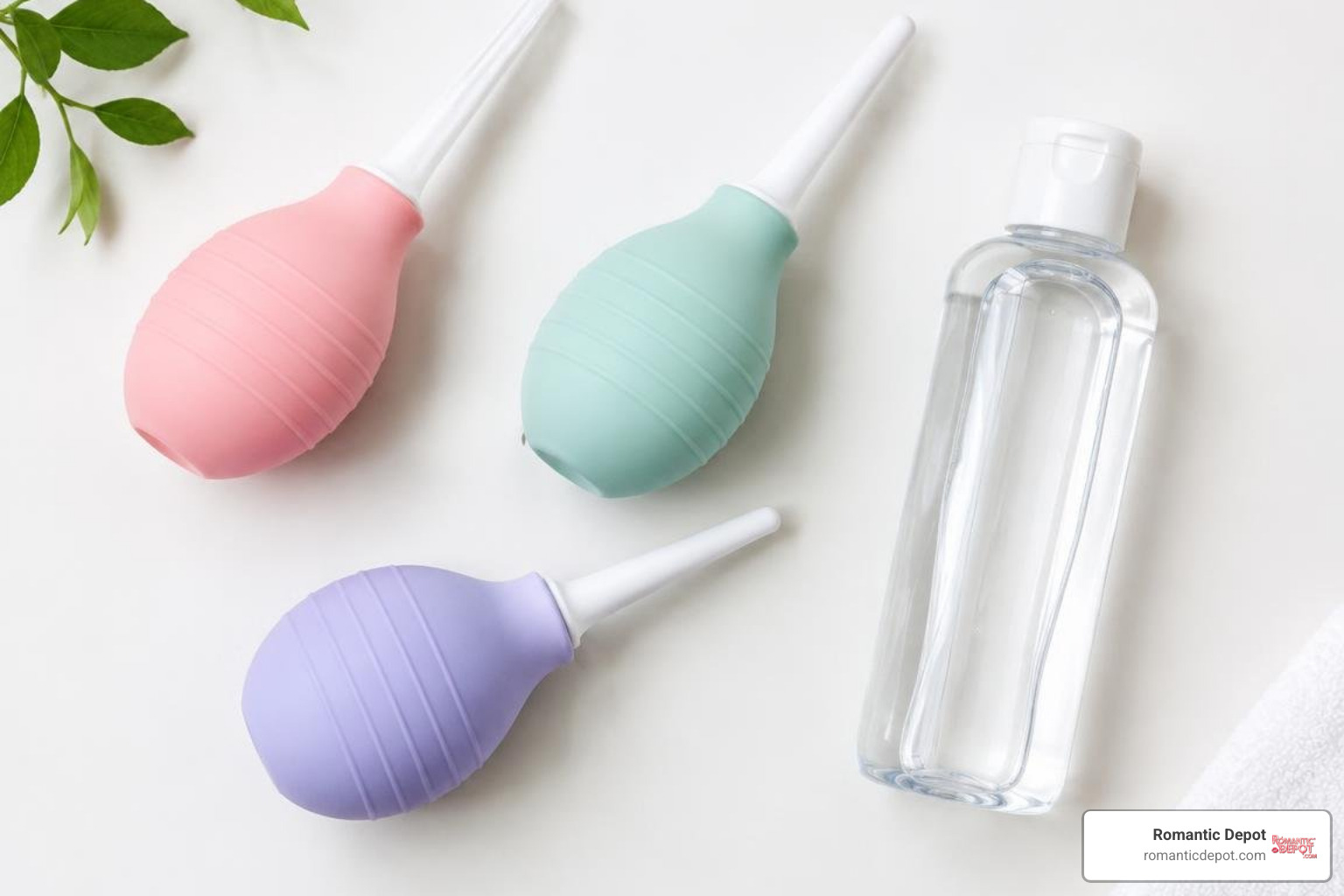
A specialized bulb syringe is the gold standard for sexual preparation. Premium options, such as the Pure for Men Bum Bulb, are crafted from body-safe, non-porous materials that are free from BPA, phthalates, and latex. These bulbs hold between 3 and 8 ounces of fluid—the ideal capacity to cleanse the distal rectum without flooding the upper digestive tract.
Bulb douches feature smooth, rounded nozzles designed for comfortable insertion. Keeping these tools clean is easy: wash them thoroughly with antibacterial soap and warm water after every session. To protect your intimate wellness, learn more with our guide to keep it fresh: a step-by-step guide to sex toy hygiene.
Key Differences Between an Anal Douche Enema and Clinical Laxatives
It is critical to distinguish between a personal hygiene rinse and a medical enema. Over-the-counter laxative enemas (such as standard Fleet products containing sodium phosphate or bisacodyl) are formulated specifically to treat acute constipation. They chemically irritate the bowel wall and draw water from your body to trigger aggressive spasms.
Using laxative formulations for intimate preparation causes severe abdominal cramping, mucosal dehydration, and unpredictably loose bowel movements. Always opt for plain lukewarm water or mild saline, following clinical safety recommendations for anal douching to keep your tissues healthy.
Shower Attachments and High-Volume Systems
Shower attachments connect directly to bathroom plumbing and provide an endless stream of water. While popular for their convenience, they present serious health hazards. Domestic plumbing lines suffer from unpredictable temperature spikes that can scald internal mucosal membranes.
Furthermore, household water pressure easily exceeds safe limits for rectal tissue, forcing large quantities of water deep into the colon and risking dilutional electrolyte shifts or internal micro-perforations. For safe personal prep, low-volume, hand-controlled bulbs remain the best choice.
Step-by-Step Process for Safe and Effective Cleansing
Achieving a clean, comfortable result requires a gentle technique rather than aggressive flushing. Follow these practical steps to protect your sensitive tissues.
Step-by-Step Guide to Using an Anal Douche Enema Safely
- Prepare Your Solution: Fill your clean bulb with lukewarm water or pure isotonic saline (made by dissolving 1 teaspoon of non-iodized salt in 1 quart of warm distilled water). The fluid should feel neutral against your inner wrist—never hot or freezing cold.
- Apply Generous Lubrication: Never insert a dry nozzle. Coat the nozzle and your anal opening with a quality lubricant. You can review our advice on how to choose the perfect anal lubricant for seamless pleasure or read the complete guide to best lube for sex to pair the right formula with your setup.
- Assume a Comfortable Position: Stand in the shower with one leg elevated, squat over the toilet, or lie on your left side with your knees bent toward your chest.
- Insert Gently: Take a deep breath, exhale to relax your pelvic floor, and slowly guide the nozzle tip 1 to 2 inches into the rectum. Never force the nozzle past resistance.
- Instill the Fluid Slowly: Squeeze the bulb steadily to release roughly 3 to 4 ounces (100–120 mL) of liquid. Maintain your squeeze on the bulb as you withdraw it to prevent backflow of rectal fluid into the device.
- Hold and Expel: Retain the fluid for 15 to 30 seconds to loosen surface residue, then sit on the toilet and let your body evacuate naturally without excessive straining, following proper techniques for internal rectal hygiene.
- Repeat Minimally: Repeat the rinse once or twice. As soon as the expelled water returns clear, stop. Continuing to rinse will wash out the colon and cause lingering water leaks.
- Clean Your Equipment: Disassemble your bulb, wash every piece thoroughly with warm water and soap, and let it dry completely. For full sanitation steps, check our walkthrough on how to clean sex toys quickly after partnered or solo play.
Timing and Post-Douche Waiting Periods
Never rush directly from the bathroom to the bedroom. It takes time for the lower bowel to settle and expel lingering droplets trapped between internal rectal folds.
We recommend finishing your cleansing routine at least 45 to 60 minutes before any sexual activity. This waiting window allows your rectal mucosa to calm down, re-establish its natural pH balance, and eliminate surprise residual moisture.
Health Risks, Frequency Limits, and Harm Reduction
While douching can enhance intimacy, frequent or aggressive use poses clear medical risks. Understanding these concerns helps you protect your long-term colorectal and intimate health.
Managing Infection Risks and Frequency Limits
Epidemiological studies indicate that rectal douching is widely practiced; among men who have sex with men (MSM) engaging in receptive intercourse, lifetime prevalence ranges up to 88%, with 43% to 64% reporting recent use. In broader populations, a survey of over 1,700 individuals found that more than 70% of men and 32% to 35% of women practiced pre-sex douching.
However, frequent internal flushing creates vulnerabilities. A 2019 systematic review and meta-analysis of 13 studies involving over 37,000 participants found that pre-sex rectal douching correlated with a pooled odds ratio of 2.38 for HIV infection. Additional research demonstrates that people who douche have 74% higher odds of acquiring bacterial STIs, such as rectal gonorrhea or chlamydia (adjusted OR 2.31).
These elevated risks stem from two main mechanisms:
- Epithelial Stripping: Water flushes away the protective mucus barrier, exposing sensitive epithelial tissue.
- Microtrauma: Repeated insertion and pressurized water create microscopic tears that serve as direct entry pathways for pathogens.
To protect yourself, limit internal douching to no more than 2 to 3 times per week, and never perform multiple deep flushes in a single day. Always use barrier protection and plenty of lube when practicing safe rear entry.
Harmful Substances and Hazardous Habits to Avoid
Your rectal lining is an absorptive mucous membrane, not regular skin. Never introduce the following substances into your body:
- Soaps, Detergents, or Shampoos: These strip lipids, cause chemical inflammation, and trigger severe burning.
- Alcohol, Hydrogen Peroxide, or Bleach: These toxic agents cause direct tissue necrosis and life-threatening ulcerations.
- Essential Oils, Witch Hazel, or Vinegar: These acidic compounds severely burn internal tissue.
- Stimulant Laxative Liquids: They cause rapid dehydration and painful cramping.
Stick exclusively to body-temperature tap water (for occasional use) or isotonic saline solution.
Healthy Alternatives: Cleanliness Without Douching
You do not need to wash internally to enjoy clean, worry-free anal pleasure. By focusing on your diet and daily habits, you can achieve natural cleanliness without touching a douche bulb.
Fiber Supplementation and Digestive Regularity
Dietary fiber is the most reliable tool for natural cleanliness. Consuming 28 to 34 grams of soluble and insoluble fiber each day creates bulky, well-formed stools that pass cleanly and leave little to no residue behind.
Taking a daily psyllium husk supplement (such as pure capsules or powder mixed in water) acts like a gentle internal sponge, sweeping the digestive tract and facilitating effortless, complete bowel movements. When your digestion is consistent, a simple bathroom trip hours before play is often all the prep you need before using comfortable butt plugs or exploring anal beads.
External Washing and Non-Invasive Prep
For most encounters, an external wash is safer and gentler than internal flushing:
- Take a warm shower and gently cleanse the perineum and anal opening using warm water and a mild, unscented body wash.
- Use a home bidet attachment for a soothing, non-invasive clean after bowel movements.
- Wipe with soft, unscented, alcohol-free wet wipes (pat gently rather than rubbing abrasively).
- Give your body time to unwind. Engaging in slow, sensual anal foreplay naturally prepares your pelvic floor without internal disruption.
Frequently Asked Questions About Anal Douching
How long should you wait to have sex after douching?
We recommend waiting at least 45 to 60 minutes after your final rinse before engaging in anal penetration. This window gives your lower bowel time to settle, ensures all residual water is evacuated, and allows natural mucosal moisture to rebalance.
Is it safe to douche with regular tap water?
Occasional douching with lukewarm tap water is generally fine for healthy individuals using small volumes (under 150 mL). However, tap water is hypotonic compared to your bodily fluids, meaning frequent use draws essential salts out of rectal cells, causing irritation. If you douche regularly, switch to homemade or commercial isotonic saline to preserve your electrolyte balance.
What are the symptoms of over-douching or rectal injury?
Stop douching and consult a healthcare professional if you experience any of the following symptoms:
- Bright red blood in your stool or continuous bleeding from the rectum.
- Persistent abdominal cramping, bloating, or sharp pelvic pain.
- Chronic feelings of rectal fullness or an inability to pass stool normally.
- Burning or discharge indicating potential mucosal infection.
Never douche if you have active hemorrhoids, anal fissures, or inflammatory bowel conditions.
Conclusion
Anal hygiene should never feel stressful, complicated, or intimidating. Douching is simply an optional tool for personal peace of mind—not an obligation for satisfying intimacy. By using gentle, low-pressure tools, sticking to safe saline or lukewarm water, and respecting your body’s limits, you can protect your intimate wellness while maximizing comfort.
Prioritize your health by choosing high-quality, body-safe materials. Visit our stores across New York City and New Jersey or explore body-safe anal toys directly at Romantic Depot to find curated essentials designed for your ultimate comfort and pleasure. For help selecting premium hardware, browse the ultimate guide to choosing body safe pleasure toys and play with complete confidence.